
Georgia Tech Professor Leads Pioneering Research in Women’s Health
Jun 12, 2026 —
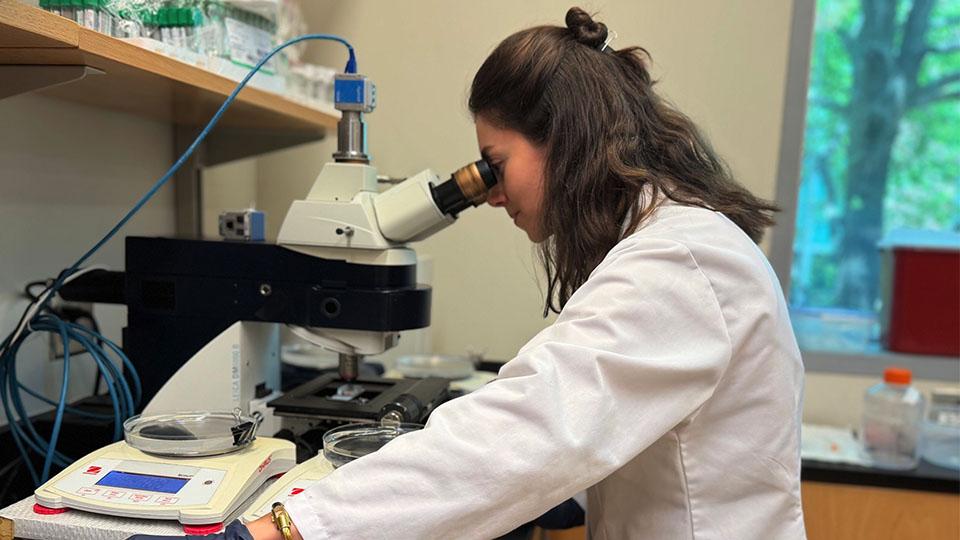
Doctoral student Raphaelle Dodart looks through a microscope at a small sample of clotted blood contained in a microfluidic chip.
It affects up to one-third of the human population and can create symptoms severe enough to lead to hospitalization, yet much about what causes it remains a mystery. It’s rarely discussed in public, often goes undiagnosed, and remains a consistently underfunded and understudied area of science.
What is this mystery condition? Heavy menstrual bleeding (HMB), which can cause severe pain, anemia, fatigue, and may even require some women to get blood transfusions.
Science has historically overlooked diseases and conditions such as HMB that predominantly affect women, but one Georgia Tech researcher and his doctoral student are working to change that.
“About 30 percent of women have heavy menstrual, and that can cause them to become anemic,” said David Ku, a Regents’ Professor in the George W. Woodruff School of Mechanical Engineering. “There are a lot of lost days where there's fatigue and embarrassment from bleeding too much, and the causes of that bleeding are poorly understood.”
Ku, a faculty member in the Parker H. Petit Institute for Bioengineering and Bioscience, has received initial funding of $466,000 from Wellcome Leap to study whether clotting disorders contribute to HMB. The condition is most often attributed to hormone imbalances, leading many patients to receive treatments such as hormonal therapies that help manage symptoms. But in some cases, these treatments may treat symptoms while leaving an underlying bleeding disorder undiagnosed.
“If a woman goes on the pill, it supposedly regulates the hormones and masks if there's a blood clotting problem,” Ku said. “If she has a clotting problem and doesn’t know it, she could run into other clotting problems if she has an injury or some type of trauma in the future. By diagnosing it properly, we can fix it properly.”
As part of the study, Ku and his team of Chris Bresette, Minki Kang, and Raphaelle Dodart, are using a microfluidic blood-clotting test developed in the Ku laboratory to investigate whether clotting dysfunction contributes to heavy menstrual bleeding. This handheld instrument — which runs blood through a microfluidic tube about the width of a human hair — measures the speed of blood clotting and may open up possibilities for more personalized patient care.
“We want to develop a point of care device that could allow gynecologists to diagnose the problem while the patient is visiting, as opposed to sending the blood off to the lab,” Ku said. “Currently, there is no good test for that. We’ve simplified the microscope system so that you can directly see whether the blood is clotting by going through that small tube.”
Dodart, who was studying the mechanics of clotting and hypothesized the prevalence in HMB, is recruiting volunteers for the study. She is currently working with women who exhibit symptoms of HMB and are willing to give a small amount of blood to be tested through the diagnostic device. If her hypothesis around blood clotting is proven true, the study can expand further into the realm of treatment options.
“The main goal now is that we identify a cause,” Dodart said. “In the future, hopefully we can focus on finding some solutions, some non-hormonal treatments, because we are looking for a treatable dysfunction.”
The Wellcome grant could provide up to $1 million of total funding for the HMB study, spread out over three years. Though women’s health remains a largely underfunded area of science, the landscape is beginning to shift thanks to researchers like Ku and Dodart.
“This is a widespread problem that not too many people have studied,” Ku said. “What we are studying is one of the treatable causes for heavy menstrual bleeding that we could actually change the outcome of right now.”
Ashlie Bowman | Communications Manager
Parker H. Petit Institute for Bioengineering and Bioscience
Georgia’s First Superfund Research Center to Study Hazardous Industrial Pollution, Remediation
Jun 10, 2026 —
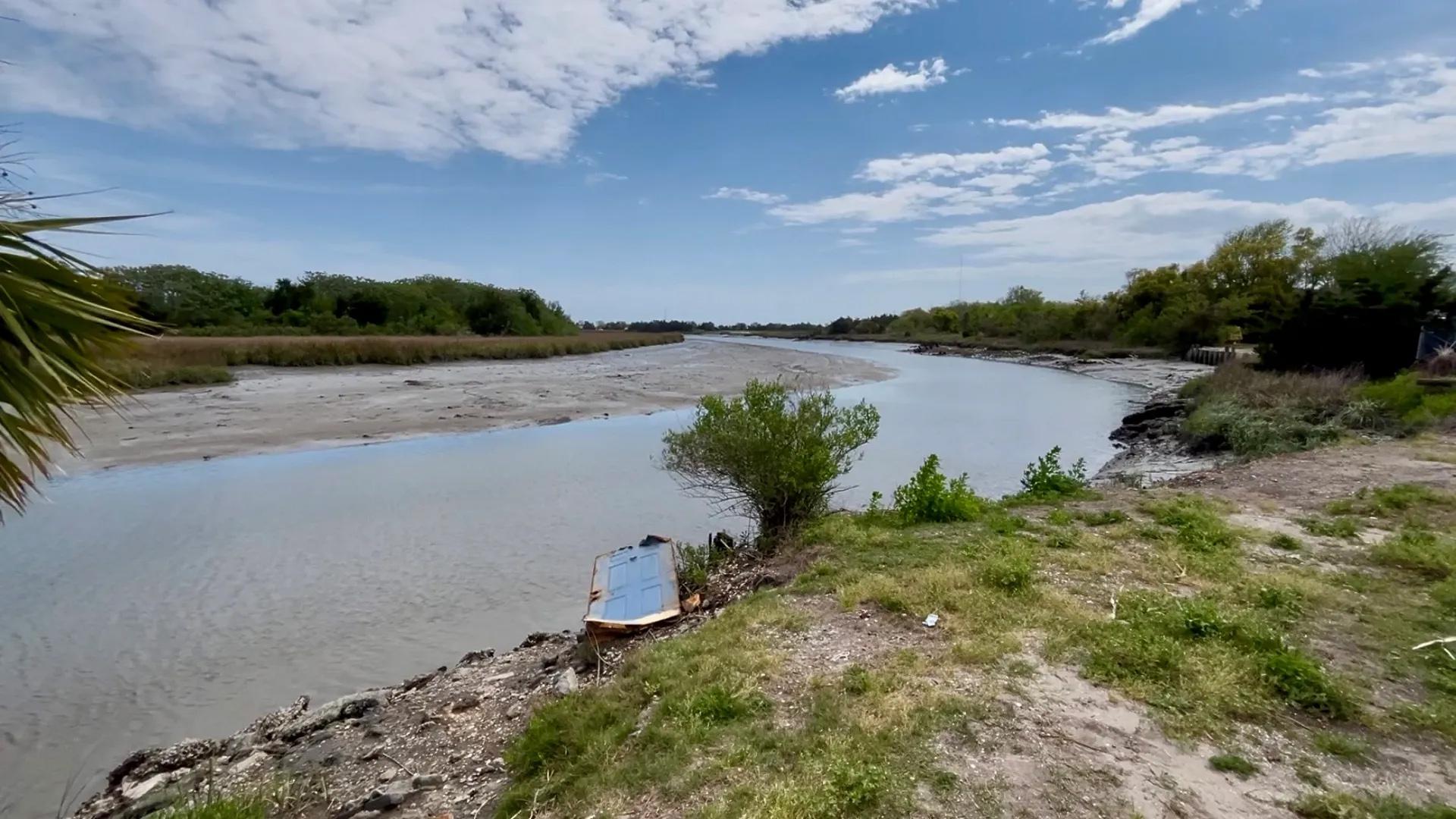
Georgia's first Superfund Research Center will address the human and environmental effects of heavily polluted sites located in coastal areas, including this one, in Glynn County, Georgia. (Emory photo by Rob Spahr)
A coalition of scientists from six universities and community partners has been awarded a National Institutes of Environmental Health Sciences (NIEHS) grant to establish Georgia’s first Superfund Research Center to study the effects and potential remediation of harmful contaminants in a coastal county with a long history of industrial pollution.
Superfund sites are highly polluted areas designated by the U.S. Environmental Protection Agency (EPA) as needing cleanup of hazardous waste that threatens human health or the environment. Superfund Research Centers are not physical buildings, but rather a coordinated set of research studies designed to solve complex environmental health problems, decrease exposure to contaminants, and improve human health. There are fewer than 24 Superfund Research Centers in the United States.
The new center will be Georgia’s first and will focus on industrial pollution—from contaminants such as polychlorinated biphenyls (PCBs) and toxaphene—in Glynn County. Situated on the state’s southeastern coast, the county is home to 17 identified hazardous waste sites and four Superfund sites that are on or proposed for the EPA’s National Priorities List of most polluted sites.
The center’s multiple research initiatives—which will be led by Emory University in collaboration with faculty from the University of Georgia, Georgia Institute of Technology, Morehouse School of Medicine, Spelman College, and Texas Tech University—will include:
- A human health study to evaluate potential links between chemical exposures and health impacts, with an emphasis on metabolic disease
- A laboratory-based toxicity study to assess how, and to what extent, the toxicants are harmful to health
- Environmental sampling to explore potential human exposure pathways
- An investigation into how extreme weather events affect the location and mobility of hazardous chemicals
- Exploration of remediation options that are less disruptive to the sensitive coastal ecosystem
“By combining cutting-edge exposure science and health research with direct community partnerships, the center will translate complex environmental data into practical information that can support healthier decisions for families, clinicians, and policymakers. It can provide a model for addressing environmental contamination and protecting public health in vulnerable communities nationwide,” says Dana Barr, PhD, professor of environmental health at Emory University’s Rollins School of Public Health and director of the Superfund Research Center.
In addition to the primary research studies, the center—which will be funded by NIEHS at approximately $15 million over five years—will include other projects concentrating on a variety of community-focused and community-driven initiatives. These projects will include:
- Community engagement programs
- Educational outreach for local youth
- Enhancing the accessibility of Healthy Coastal Neighborhoods’ Seafood Smart website
- A community advisory group
- Education opportunities for area health care professionals on how to manage patients who may have high exposures
“The issue of industrial contamination is inherently complex, and this Superfund Center represents a unique opportunity to address it from multiple angles. Our research will span everything from the toxicity and health impacts of these chemicals to their presence in the environment and innovative approaches for remediation,” says Noah Scovronick, PhD, associate professor of environmental health at Rollins and deputy director of the Superfund Research Center. “Just as important, the Center is designed to support community-led efforts to raise awareness and reduce exposures. By bringing these elements together, we aim to generate actionable knowledge and help answer questions that residents have been asking for decades.”
While the Superfund Research Center will be focused on the industrial pollution issues in one coastal county, the scientists say the data produced by the studies will provide meaningful benefits that extend far beyond Georgia.
“Even when production stops, these chemicals can continue to get into people’s bodies through lingering exposure pathways,” says Melanie Pearson, PhD, associate professor at Rollins. “Understanding how that happens is essential to reducing risk. Communities across the country are dealing with similar environmental contamination. Working in partnership with affected communities not only strengthens the science, but helps ensure it leads to meaningful, real-world benefits.”
"We are excited to be partners in this project," said Jill Gambill, executive director of the CEAR Hub and senior research associate for the Institute for People and Technology at Georgia Tech in Savannah. "The residents of Glynn County have been asking hard questions about their health and environment for a long time. This center is our opportunity to put Georgia Tech's resources and expertise to work directly for the community.”
Article by Rob Spahr, Emory University
Walter Rich, Research Communications, Georgia Tech
College Recognizes 8 Faculty Members with Excellence Awards
May 22, 2026 —
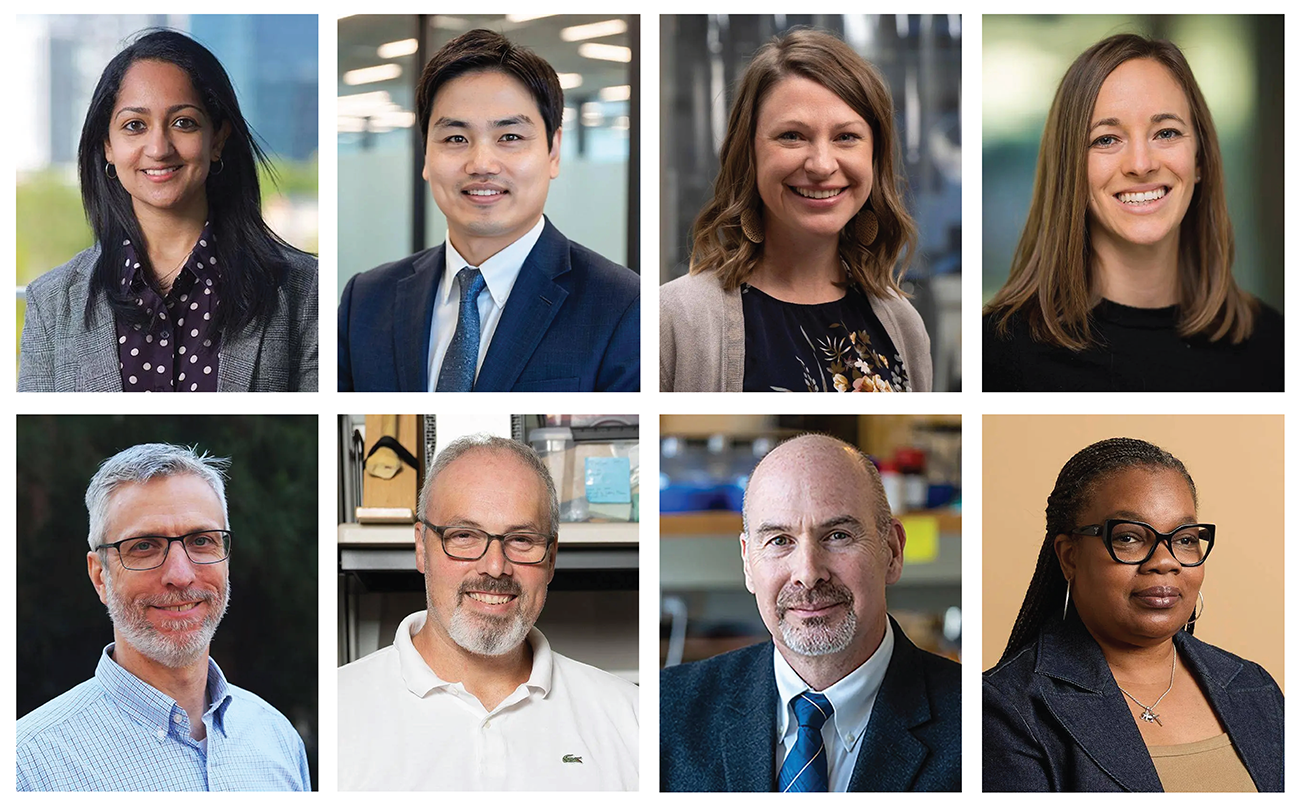
College of Engineering Faculty Members with Excellence Awards (Akanksha Menon, Hong Yeo, Kinsey Herrin, Lauren Steimle, Kevin Haas, Omer Inan, Scott Hollister, and Kim Paige).
Eight faculty members have been honored by the College of Engineering (CoE) for their excellence in research, service, teaching, inventorship, and commercialization.
Candidates for the fifth annual CoE Faculty Excellence Awards were nominated by their peers or submitted self-nominations. Materials were reviewed by a committee of academic and research faculty members within the College.
Two of these faculty award winners, Hong Yeo and Omar Inan, are members of the Institute for People and Technology. Read the full CoE article >>
Workshop Explores Policy Needs as Data Centers Surge in Georgia
Apr 29, 2026 —
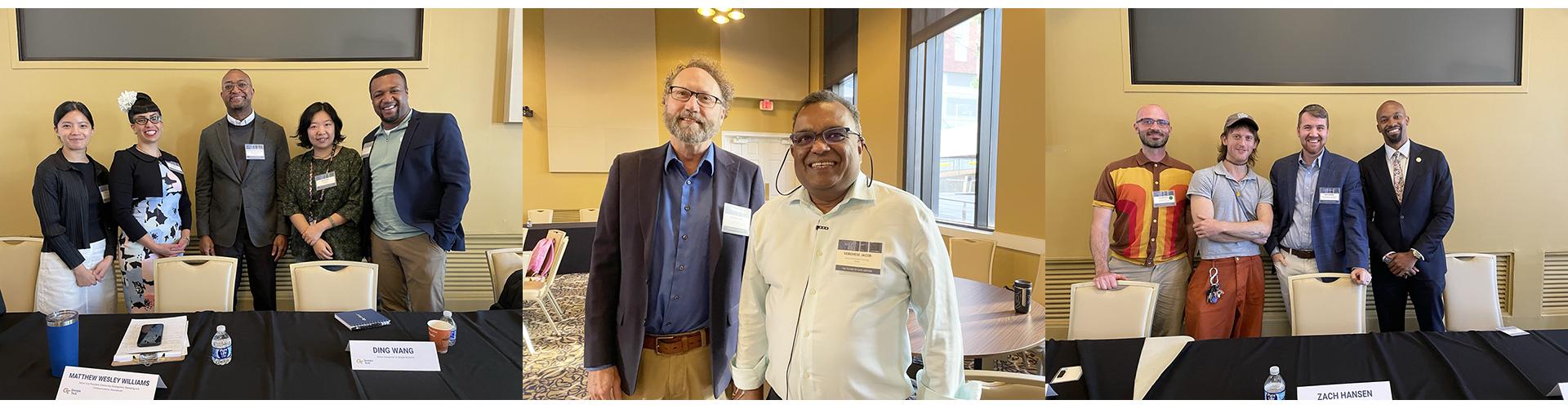
Left: panelists Cindy Lin, Celine Benoit, Matthew Williams, Ding Wang, and Kahil Bostick. Center: Michael Best and Verghese Jacob. Right: panelists Allen Hyde, Michael Czajkowski, Zachary Hansen, and Donnie Beamer. Not pictured: Peter Hubbard who joined virtually.
Georgia Tech hosted an event on April 21 examining the rapid expansion of data centers and the social and policy issues emerging alongside the growth of AI infrastructure. The program, The Future of Data Centers: Shaping the Social and Policy Landscape of Our AI Infrastructure, was held at the Alumni House and co-sponsored by the Institute for People and Technology and the Brook Byers Institute for Sustainable Systems (BBISS).
Georgia has become the world’s second-largest data center market, a shift that has brought economic opportunity as well as concerns about water use, energy demand, land development, and impacts on host communities. One recurring theme throughout the event was the tendency for environmental and resource issues to overshadow other important policy questions about community impact, transparency, and long-term governan
Introductory remarks were made by Beril Toktay, executive director of the Brook Byers Institute for Sustainable Systems, and Michael Best, executive director of the Institute for People and Technology.
Verghese Jacob, senior vice president of technology at the DayOne corporation, delivered the keynote address. Jacob discussed how DayOne works with governments in Asia to plan data centers and said early policy development and consistent communication can help communities better understand the impact and manage growth for long-term, mutually beneficial partnerships between governments and communities.
The event also included a BBISS Connect Workshop, led by Kristin Janacek, a senior extension professional with BBISS. The workshop built on BBISS’s Sustainability for Data Centers Insights Series and asked participants to contribute to a collaborative “blue paper” intended to guide future research partnerships and responses to funding opportunities.
Two panel discussions explored the social and political dimensions of data center development. The first, moderated by Cindy Lin, an assistant professor in the School of Interactive Computing, focused on international perspectives. Panelists included Celine Benoit of the Atlanta Regional Commission, Matthew Wesley Williams of Groundswell, Kahlil Bostick of Ryan Companies, and Ding Wang of Google Research. They discussed global examples of community-centered planning and the need for transparency in negotiations.
A second panel, moderated by Allen Hyde, an associate professor in the School of History and Sociology, examined collaboration between communities and government agencies. Panelists were Georgia Public Service Commissioner Peter Hubbard; Donnie Beamer, senior technology advisor for the City of Atlanta; Atlanta Journal-Constitution reporter Zachary Hansen; and Michael Czajkowski, director of advocacy for Science for Georgia. The group highlighted the importance of proactive regulation and clear communication with residents as data center development accelerates.
Speakers throughout the day emphasized that Atlanta’s continued growth in the data center sector will require coordinated planning and meaningful engagement with affected communities. The event closed with a call for all stakeholders to be proactive about creating policies that balance the technological and economic promise of the data center building boom with environmental and community concerns.
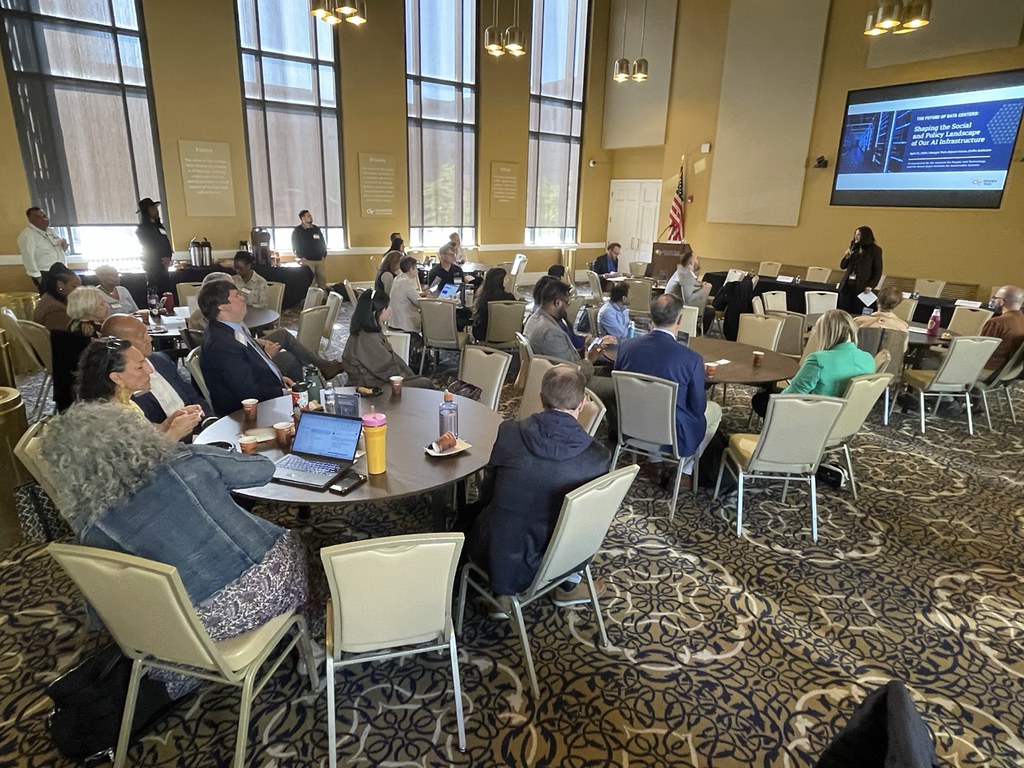
Beril Toktay delivering the welcome and introductory remarks to the attendees.
Walter Rich
Joint Workshop Highlights Emerging Research at the Intersection of Sustainability, Mobility, and Health
Apr 23, 2026 —
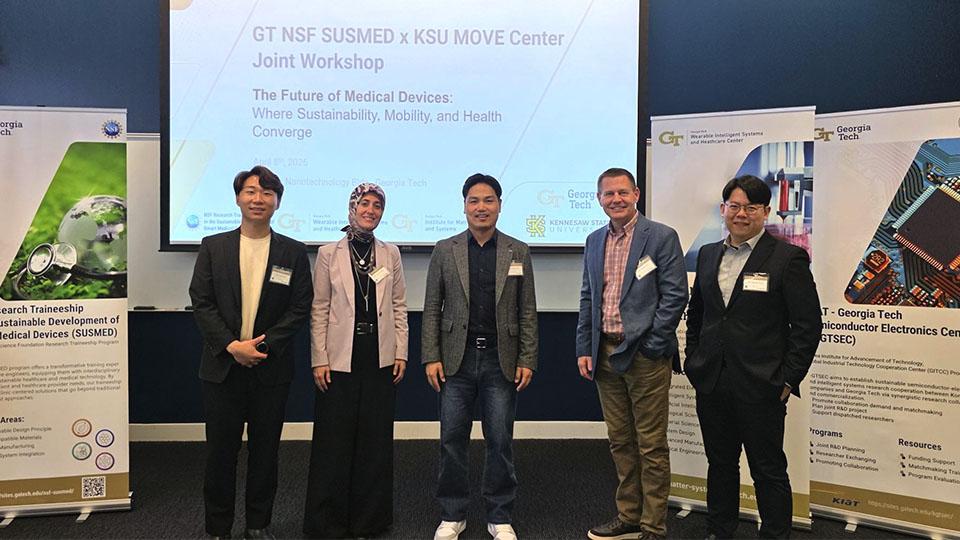
Students, faculty, and researchers from Georgia Tech and Kennesaw State University gathered on April 8 for a joint workshop between Georgia Tech's NSF Sustainable Development of Smart Medical Devices (SUSMED) program and KSU's Mobility for Everyone (MOVE) Center. The full-day event explored how sustainable design, mobility science, and health technologies are converging to shape the next generation of medical devices.
Hosted in Georgia Tech’s Marcus Nanotechnology Building, the workshop brought together trainees from the NSF SUSMED program and students from the MOVE Center for a day of presentations, posters, and hands‑on demonstrations.
The event was co‑led by Hong Yeo, Peterson Professor in Pediatric Research in the George W. Woodruff School of Mechanical Engineering at Georgia Tech; Karam Kim, research faculty at the same school; and Ayse Tekes, associate professor in Mechanical Engineering at KSU.
“I am thrilled to have hosted this first joint event between the NSF NRT in the WISH Center at Georgia Tech and the KSU MOVE Center. When I first envisioned it, I hoped it would spark meaningful conversations between students and researchers — but what unfolded far exceeded every expectation,” Yeo said. “This was not just a gathering; it was a launchpad for exciting new collaborative projects, dynamic student exchange programs, and bold, ambitious bets on the future of our field. A heartfelt thank you to IMS Director Eric Vogel, Josh Lee, the WISH Center program manager, and Karam Kim, research faculty extraordinaire — none of this would have been possible without their support.”
A central goal of the workshop was to give students meaningful opportunities to present their research and engage with peers across disciplines. According to Tekes, who is the director of the MOVE Center, events like this play a critical role in shaping early career researchers.
“I think these events are very eye-opening,” Tekes said. “They give students a real opportunity to showcase their results, but also to collaborate and learn about research outside their own area. Seeing work across disciplines sparks new questions and helps them think differently.”
Throughout the day, students presented projects on wearable devices, mobility technologies, digital health tools, sustainable engineering approaches, and more. Tekes emphasized how valuable it is for students to practice communicating their work to a broad audience.
“They are getting the practice to present their outputs — the key outcomes of their research — and explain the significance and importance,” she said. “They’re also learning to answer questions from different perspectives, because in this room you’re seeing engineers, computer scientists, and clinicians.”
Due to the strong turnout and enthusiastic participation throughout the day, organizers are already planning another session next semester. By bringing together diverse expertise from both schools, the event highlighted the shared commitment to developing medical technologies that improve mobility, health, and quality of life.
Funding sources: NSF NRT-FW-HTF: NSF Traineeship in the Sustainable Development of Smart Medical Devices (Award # 2345860) and WISH Center grant from the Institute for Matter and Systems
Ashlie Bowman | Communications Manager
Parker H. Petit Institute for Bioengineering and Bioscience
Written by Scarlett Smith
Zoo Atlanta Elephants Embrace New GT-Designed Interactive Enrichment Wall
Apr 22, 2026 —
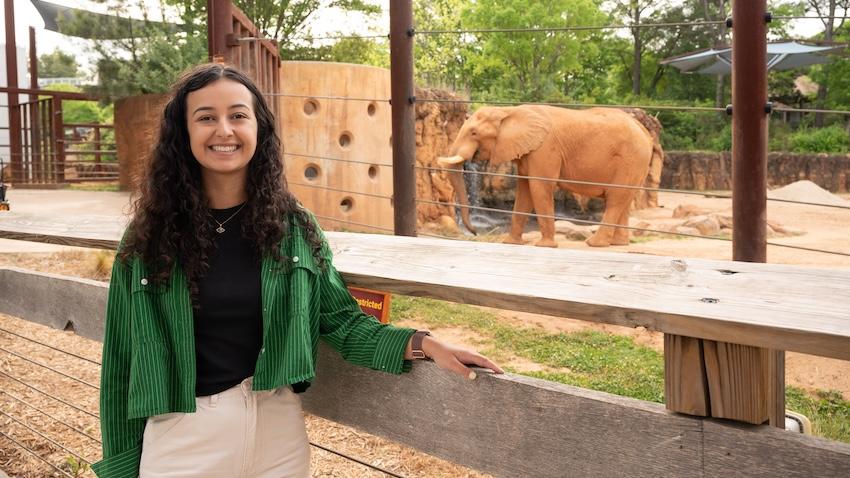
Elephants require mental stimulation in their everyday lives, which is why Zoo Atlanta redesigned its African Savanna habitat that shelters four African elephants in 2019. The habitat includes an elephant enrichment wall that has numerous holes for elephants to stick their trunks into as they search for food on the other side.
The elephant enrichment wall at Zoo Atlanta recently received an upgrade thanks to a Georgia Tech Ph.D. student. Arianna Mastali designed an audio enrichment system that uses computer vision to detect when an elephant sticks its trunk into the enrichment wall as it searches for food. The system then sends a signal to play a unique tone from a nearby speaker that corresponds to each hole. So far, Mastali has found that elephant wall interactions have increased by 176%, and the elephants are visiting the wall even when there isn't food behind it.
Titan, Msholo, Kelly, and Tara are just like any other African elephants — intelligent creatures that require mental stimulation in their everyday lives.
They would normally get this in their natural habitats while foraging for food and staying alert to predators that might target calves.
However, the four elephants reside at Zoo Atlanta, so they don’t have to worry about these things.
That’s why zoo caretakers are always on the lookout for better ways to help their elephants exercise their brains.
The caretakers at Zoo Atlanta found one when they met Arianna Mastali, a Ph.D. student in Georgia Tech’s School of Interactive Computing. Mastali designed an audio enrichment wall to help stimulate Zoo Atlanta’s elephants.
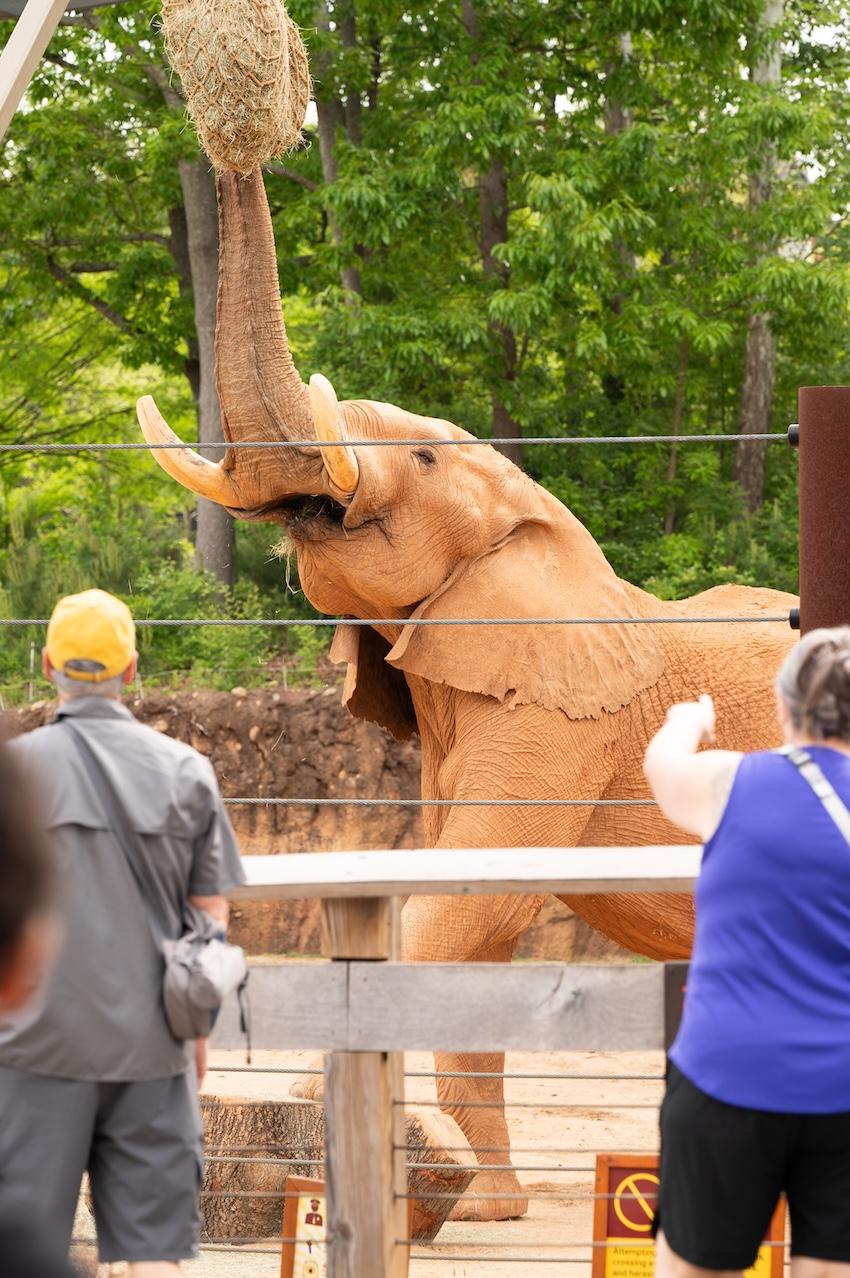
Many zoos build concrete enrichment walls to foster elephant problem-solving and critical thinking. The walls usually have holes for the elephants to reach through with their trunks as they search for food, treats, or playful objects on the other side.
Mastali enhanced Zoo Atlanta’s enrichment wall by adding an interactive audio component. A nearby speaker system emits distinctive low-frequency tones when an elephant sticks its trunk into a hole.
“They’re intelligent creatures that require a lot of complexity in their habitat,” Mastali said. “We wanted to add to that complexity while giving them more control.”
Experimenting in the Wild
Mastali’s system uses cameras and computer vision to detect when an elephant’s trunk is inside a hole and then sends a signal to the speakers to play a sound.
Mastali is a member of the Georgia Tech Animal Lab, directed by School of IC professor Melody Jackson. The lab often uses sensing technology to enhance animal wellness.
Mastali said she tried incorporating sensing devices into her project several times. She constructed an insert made of PVC pipe and attached a sensor to its base that used infrared beams to detect the elephant’s trunk.
However, she said it was difficult to account for the elephants’ strength. Their trunks would break the insert after a day or two.
She pivoted toward computer vision to remove the risk of damage and keep the enrichment wall as close to natural as possible.
“A big lesson we learned was that using existing materials the elephants are already familiar with was the best way to do things, and it simplified our design process,” she said.
Shane Rosse, a student in Georgia Tech’s Online Master of Science in Computer Science (OMSCS) program, assisted Mastali with the computer vision component.
Enhancing Environmental Enrichment
Mastali observed the elephants’ behavior at the wall seven days before and seven days after the installation of the audio enrichment system.
The number of times the elephants approached the wall after installation increased by 176%, and time spent at the wall increased by 71%
“We weren’t sure at first if they would care that much, so it was great to see how much time they spent at the wall, especially our less dominant females,” said Kirby Miller, senior elephant caretaker at Zoo Atlanta. “They seem to like it the most.”
Miller said the elephants used to only approach the wall when they knew there was food behind it. That started to change after the audio enrichment system was installed.
“We would be off somewhere else, and we’d hear the speaker playing the sounds, and we knew there wasn’t any food back there,” Miller said. “Tara had her trunk in one of the holes, just listening to the sound. That let us know they do like it, and they’re very curious about it.”
Miller said because elephants have sharp memories and acute senses of hearing and smell, their habitats must be designed with that in mind.
Zoo Atlanta’s African Savanna elephant habitat was redesigned in 2019. In addition to the enrichment wall, it includes a bathing pond, two waterfalls, and swing boom devices that hold hay for elephants to eat as they would in the wild.
Miller said elephants sheltered at any zoo or conservation would benefit from enrichment devices enhanced by technology.
“I think anything they can participate in that gives them choice and control is great for all zoo elephants,” she said. “It depends on the elephants, but with our elephants, they can hear much higher frequencies than we can. That noise isn’t that loud for us, but for them, they’re feeling that noise, and they can hear much more, which makes it more stimulating for them.”


IPaT Seed Grant Winners

Speakers:
Pediatric Tech Talk Webinar with Erin Keller
Join us for the next Pediatric Tech Talk Webinar on Wednesday, May 20, 2026, from 12:00-12:30 PM, hosted by Leanne West, featuring Erin Keller, Venture Fund Lead at GTF Ventures.
IDEaS + AI-ALOE Distinguished Lecture: AI and Lifelong Learning: Building the 60-Year Curriculum for the Fourth Industrial Revolution
Abstract
Why the Strait of Hormuz Is More Than an Energy Crisis
Apr 03, 2026 —

Rising oil and gasoline prices have been the center of attention since the closure of the Strait of Hormuz. But that immediate effect tells only part of the story. Because oil and gas underpin production, transportation, and logistics, higher energy costs will gradually move through supply chains — meaning the most significant economic consequences may not appear for months.
“The effects move slowly and appear in places people do not connect to energy,” said Tibor Besedes, professor in the School of Economics. “Oil and natural gas are part of the cost structure for an enormous range of goods.”
About 20% of global oil and liquefied natural gas flows through the waterway linking the Persian Gulf to world markets. When that flow is constrained, the impact ripples outward across industries most people never associate with an energy crisis.
“In complex supply chains, a disruption in one critical link, even if only briefly, can cascade through the system, well beyond the initial event,” says Pinar Keskinocak, chair and professor in the H. Milton Stewart School of Industrial and Systems Engineering. “As delays persist and compound, interconnected systems often take a long time to recover, rebalance, and return to normal.”
Price Pressures That Arrive Quietly
Early effects are already visible.
Jet fuel availability is tightening, and diesel prices are rising across Asia. China has ordered refineries to stop exporting fuel, creating shortages that are increasing shipping costs for U.S. imports, from consumer electronics to pharmaceuticals.
The strait is also a key corridor for naphtha, a feedstock used to produce plastics, packaging, solvents, textiles, and pharmaceutical components. Roughly 85% of Middle Eastern polyethylene exports move through the strait.
“Consumers won't see the effect of this quickly,” Besedes says, “but the longer the strait is closed, the higher the cost will be of all of these products naphtha is used for.”
Aluminum is equally exposed.
“Smelters require sustained, low-cost energy,” said Chris Gaffney, a professor of the practice in the Stewart School. “The Middle East accounted for roughly 21% of U.S. unwrought aluminum imports in 2025. When energy prices spike or supply is constrained, capacity is reduced or shut down, and those decisions are difficult and slow to reverse.”
Fertilizer is one of the clearest examples of delayed inflation. Natural gas is essential for its production, and Persian Gulf states account for one-third of global urea exports and half of global sulfur exports. Urea prices at the New Orleans import hub have already climbed sharply.
“We won't see the effects quickly, but rather in six to 12 months, depending on the crop and its cycle,” Besedes says. “Without or with less fertilizer, crop yields will decrease, resulting in higher prices.”
Why Hormuz Is Different From Other Chokepoints
On top of all those factors, the strait closure presents a uniquely dangerous vulnerability.
“Unlike a port strike or canal blockage, there is no meaningful way to reroute volume,” says Gaffney. “If it is disrupted, flow is constrained rather than redirected.” Pipeline alternatives replace only a fraction of the 20 million barrels per day that normally transit the strait.
“Choke point vulnerability arises when a large portion of flow depends on a route that is hard to substitute,” said Mathieu Dahan, associate professor in the Stewart School. “Hormuz has no scalable alternatives with sufficient capacity.”
Alan Erera, senior associate chair in the Stewart School expanded on Dahan’s point, noting that strait disruptions raise costs across manufacturing and distribution.
“Ships are rerouted onto longer paths, which drives up fuel and labor costs, ties up vessels and containers for longer periods, and ultimately raises inventory costs for shippers because capital is locked up while goods are still in transit,” Erera said.
When Geopolitics Meets Global Supply Chains
Additionally, the strait closure raises the risk of wartime miscalculation.
“We haven’t seen a disruption on this scale since the tanker wars of the late 1980s,” said Larry Rubin, associate professor in the Sam Nunn School of International Affairs. Gulf states' dependence on the strait constrains both regional actors and U.S. strategy, raising risks around crisis decision-making.
Rubin also points to a dimension most coverage has missed entirely. “One thing that has been overlooked by many commentators is the fact that the Iranian people have probably been hit the hardest economically,” he says. “They were already in a challenging situation. The Iranian economy won't recover quickly after the war.”
Resilience Has a Short Memory
Meanwhile, for the United States, “The Strategic Petroleum Reserve provides a buffer, and domestic energy production has improved resilience,” says Gaffney. “But the gap remains between enabling capacity and sustaining resilience. Policy can support infrastructure, but it cannot ensure private sector participants invest in resilience when cost pressures rise.”
For policymakers and industry leaders, the disruption reinforces a familiar pattern. "The supply chain remains optimized for efficiency rather than resilience, in part due to the high investment costs required to build flexibility," says Dahan.
Gaffney added that resilience does improve after disruption, but that “it erodes over time if not actively maintained.”
Even if the strait reopens, higher costs and slow restart timelines mean the system will not snap back. Experts suggest that when headlines have moved on from this disruption, it will still be shaping prices across the economy.