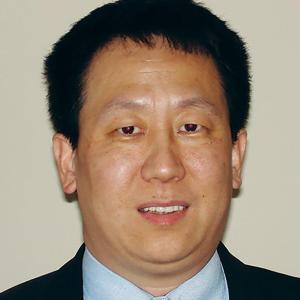
Scott McWhorter

Dr. Christopher “Scott” McWhorter is Lead for Federal Energy Strategy and National Laboratory Partnerships and a Senior Research Engineer within the Strategic Energy Institute (SEI) at the Georgia Institute of Technology. In this role, he leads Georgia Tech’s federal energy strategy, national laboratory engagement, and large-scale interdisciplinary research development efforts, helping position the Institute to compete for transformative federal research investments across the U.S. Department of Energy (DOE), Department of Defense (DOD), National Science Foundation (NSF), Department of Commerce, and other federal agencies. He works closely with faculty, industry, national laboratories, and government stakeholders to develop strategic partnerships, advance technology commercialization, and expand Georgia Tech’s research portfolio in energy, manufacturing, critical minerals, artificial intelligence, and national security.
Dr. McWhorter brings more than twenty-five years of experience spanning national laboratories, federal government, academia, and technology startups. His technical expertise encompasses hydrogen and fuel cell technologies, advanced energy storage materials, critical minerals and supply chains, grid modernization, advanced manufacturing, sensors and spectroscopy, technology commercialization, and strategic energy policy. Throughout his career, he has led the development and management of multidisciplinary research programs valued at hundreds of millions of dollars while helping organizations secure more than $750 million in competitive federal funding.
At Georgia Tech, Dr. McWhorter has played a leading role in developing major institutional initiatives focused on hydrogen, critical minerals, advanced manufacturing, artificial intelligence, and federal research partnerships. He serves as Co-Principal Investigator on a $20 million Department of Defense program focused on the manufacturing science of galvanic aluminum-based hydrogen generation technologies and has led numerous efforts to connect Georgia Tech researchers with federal agencies, national laboratories, industry partners, and regional innovation ecosystems. He previously served as Interim Managing Director of the Georgia Artificial Intelligence in Manufacturing (Georgia AIM) initiative and Interim Executive Director of the Georgia Tech Manufacturing 4.0 Consortium, where he expanded industry engagement and strengthened partnerships across the manufacturing sector.
Prior to joining Georgia Tech, Dr. McWhorter served in multiple executive and scientific leadership roles at the Savannah River National Laboratory (SRNL), including Director of Strategic Programs, Division Director for Energy Science and Technology, Director of the Laboratory Directed Research and Development (LDRD) Program, and Senior Advisory Scientist. He managed research portfolios exceeding $75 million annually and led multidisciplinary organizations of more than 65 scientists, engineers, and technical staff. During his tenure, he significantly expanded SRNL’s clean energy research portfolio, helped establish the laboratory’s Advanced Manufacturing Collaborative, and played a central role in the formation of several Manufacturing USA institutes, including the RAPID Manufacturing Institute and CESMII Smart Manufacturing Institute.
Dr. McWhorter served as a Science and Clean Energy Technical Advisor for the Hydrogen Storage Program at the U.S. Department of Energy’s Hydrogen and Fuel Cell Technologies Office. In that role, he provided technical leadership for a research portfolio exceeding $20 million annually, contributed to national hydrogen storage strategies and performance targets, guided funding opportunity development, and supported the advancement of next-generation hydrogen storage technologies. His work helped shape DOE research priorities that continue to influence the commercialization of hydrogen and fuel cell systems today.
Dr. McWhorter’s research contributions span hydrogen storage materials, advanced energy systems, critical minerals recovery, spectroscopy and sensing technologies, advanced materials characterization, and microfluidic systems. He has authored numerous peer-reviewed publications, technical reports, invited chapters, and patents, including foundational contributions to hydrogen storage technologies, energy systems analysis, optical sensing platforms, and advanced materials processing. His recent work has focused on critical minerals recovery from mining and industrial waste streams, domestic supply chain resilience, and the integration of advanced manufacturing and artificial intelligence technologies to strengthen U.S. energy and industrial competitiveness.
In addition to his research and leadership activities, Dr. McWhorter is a recognized national leader in hydrogen and clean energy deployment. He serves as Chairman of the Board of the Southeast Hydrogen Energy Alliance (SHEA), where he has helped build one of the nation’s largest regional hydrogen stakeholder networks and advance strategies supporting hydrogen infrastructure, workforce development, and commercialization across the Southeastern United States. He also serves on numerous advisory boards and technical review panels for federal agencies, manufacturing institutes, universities, and industry organizations.
Dr. McWhorter earned a Ph.D. in Analytical Chemistry from Louisiana State University and completed an ORISE Postdoctoral Fellowship at the Savannah River National Laboratory. Throughout his career, he has been recognized for excellence in research leadership, business development, technology transfer, and strategic program development, receiving multiple laboratory and national awards for advancing clean energy innovation and commercialization. His work continues to focus on accelerating the development and deployment of technologies that strengthen U.S. energy security, manufacturing competitiveness, and economic prosperity. Selected Recent Publications: 1. Tang, Y.; McWhorter, S. Kaolin Tailings Are Georgia's Hidden Gateway to Critical Minerals in AI Era. Atlanta Journal-Constitution, December 19, 2025. https://www.ajc.com/opinion/2025/12/kaolin-tailings-are-georgias-hidden-gateway-to-critical-minerals-in-ai-era/ (accessed 2026-06-01). 2. Tang, Y. and McWhorter, S. "How the US Can Mine Its Own Critical Minerals — without Digging New Holes." The Conversation, 30 July 2025, https://theconversation.com/how-the-us-can-mine-its-own-critical-minerals-without-digging-new-holes-252609. 3. Grady, C., McWhorter, S., Sulic, M., Sprik, S.J., Thorton, M.J., Brooks, K.P., Tamburello, D.A., Design Tool for Estimating Adsorbent Hydrogen Storage System Characteristics for Light-Duty Fuel Cell Vehicles. Int. J. Hydrogen Energy, 47, 29847, 2022. 4. Zidan, R., McWhorter, S., Enabling a Flexible Grid with Increased Penetration of DER: Techno-economic Analysis of Metal Hydride Thermochemical Energy Storage Integrated with Stirling Engine for Grid Energy Storage Applications. United States: N. p., 2020. Web. doi:10.2172/1632839.