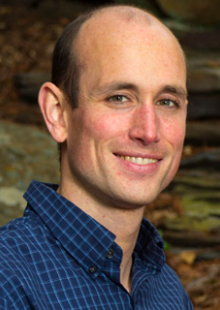
D. Zeb Rocklin

D. Zeb Rocklin's profile picture
zeb.rocklin@physics.gatech.edu

I have a broad range of interests in soft condensed matter physics and adjacent fields like statistical physics, physics of living systems and hard condensed matter. My particular focus is on the relationship between the geometric structure of a system and its mechanical response. Both biological and engineered systems often have some structure, such as networks of struts, particles jammed together or patterns of creases in thin sheets, that grant them flexibility and strength with a minimum of weight. These structures can lead to subtle and surprising mechanical response:

Assistant Professor, School of Physics
IMS Initiative Lead, Mechanical Metamaterials
Phone
404.385.8104
Additional Research

Condensed matter physics, statistical physics, physics of living systems, and hard condensed matter.

University, College, and School/Department
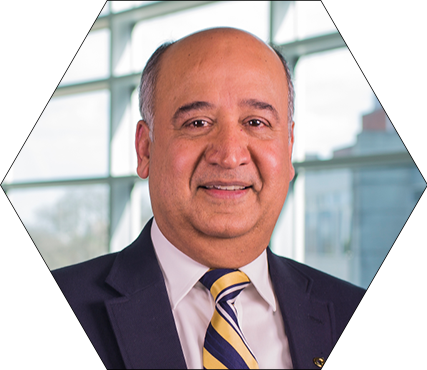
Suman Datta

Suman Datta's profile picture
sdatta68@gatech.edu

Suman Datta is the Joseph M Pettit Chair of Advanced Computing and Georgia Research Alliance (GRA) Eminent Scholar and Professor in the School of Electrical and Computer Engineering at Georgia Tech. He received his B.Tech degree in electrical engineering from the Indian Institute of Technology, Kanpur, India, and his Ph.D. degree in electrical and computer engineering from the University of Cincinnati, Ohio. His research group focuses on semiconductor devices that enable new compute models such as in-memory compute, brain-inspired compute, cryogenic compute, resilient compute etc.

From 2015 to 2022, Datta was the Stinson Endowed Chair Professor of Nanotechnology in the Electrical Engineering Department at the University of Notre Dame, where he was the Director of a multi-university microelectronics research center, ASCENT, funded by the Semiconductor Research Corporation (SRC) and the Defense Advanced Research Projects Agency (DARPA). Datta also served as the Director of a six-university research center for Extremely Energy Efficient Collective Electronics (EXCEL), funded by the SRC and National Science Foundation (NSF) to explore an alternate computing hardware that leverages continuous-time dynamics of emerging devices to execute optimization, learning, and inference tasks.

From 2007 to 2015, he was a Professor of Electrical Engineering at The Pennsylvania State University, where his group pioneered advances in compound semiconductor-based quantum-well field effect transistors and tunneling field effect transistors.

From 1999 to 2007, he was in the Advanced Transistor Group at Intel Corporation, where he led device R&D effort for several generations of high-performance logic transistors such as high-k/metal gate, Tri-gate and strained channel CMOS transistors. He has published over 425 journal and refereed conference papers and holds more than 187 issued patents related to semiconductor devices. In 2013, Datta was named a Fellow of the Institute of Electrical and Electronics Engineers (IEEE) for his contributions to high-performance advanced silicon and compound semiconductor transistor technologies. In 2016, he was named Fellow of the National Academy of Inventors (NAI) in recognition of his inventions that have made a tangible impact on quality of life, economic development, and the welfare of society.

Joseph M. Pettit Chair of Advanced Computing
Professor, School of Electrical and Computer Engineering
Georgia Research Alliance (GRA) Eminent Scholar
Office
Klaus 2360
Additional Research

High-performance heterogenous compute with advanced CMOSBrain-inspired collective state computing with advanced CMOS and beyond-CMOS semiconductorsEmerging semiconductors like ferroelectric field effect transistors, insulator-to-metal phase transition oxides, high mobility semiconducting oxides for near and in-memory compute and storageSemiconductors for cryogenic computing and harsh environment computing

Research Focus Areas
Google Scholar
https://scholar.google.com/citations?user=glw0_RkAAAAJ&hl=en

Chandra Raman

Chandra Raman's profile picture
craman@gatech.edu

The Raman Group has two main thrusts.  The team utilizes sophisticated tools to cool atoms to temperatures less than one millionth of a degree above absolute zero. Using these tools, they explore topics ranging from superfluidity in Bose-Einstein condensates (BECs) to quantum antiferromagnetism in a spinor condensate.  In another effort the team partners with engineers to build cutting edge atomic quantum sensors on-chip that can one day be mass-produced.

Professor, School of Physics
Phone
404.894.9062
Office
Howey N04
Additional Research

Spinor Bose-Einstein Condensates

University, College, and School/Department
Google Scholar
https://scholar.google.com/citations?hl=en&user=mBHjtLEAAAAJ&view_op=list_works&sortby=pubdate

Naresh Thadhani

Naresh Thadhani's profile picture
naresh.thadhani@mse.gatech.edu

Thadhani joined the faculty in the School of Materials Science and Engineering at Georgia Tech in September, 1992. His research focuses on studies of shock-induced physical, chemical, and mechanical changes for processing of novel materials and for probing the deformation and fracture response of metals, ceramics, polymers, and composites, subjected to high-rate impact loading conditions. He has developed state-of-the-art high-strain-rate laboratory which includes 80-mm and 7.62-mm diameter single-stage gas-guns, and a laser-accelerated thin-foil set-up, to perform impact experiments at velocities of 70 to 1200 m/s. The experiments employ time-resolved diagnostics to monitor shock-initiated events with nanosecond resolution employing piezoelectric and piezoresistive stress gauges, VISAR interferometry, Photonic-doppler-velocimetry, and high-speed digital imaging, combined with the ability to recover impacted materials for post-mortem microstructural characterization and determination of other properties. He has built computational capabilities employing continuum simulations for design of experiments and development and validation of constitutive equations, as well as for meso-scale discrete particle numerical analysis (using CTH and ALE3D codes) to determine the effects observed during shock compression of heterogeneous materials, using real microstructures.

Professor and Chair, School of Materials Science and Engineering
Phone
404.894.2651
Office
Love 286
Additional Research

deformation and degradation; fracture and fatigue; Ceramics; Materials Failure and Reliability; Materials In Extreme Environments; Materials Testing

Research Focus Areas
Google Scholar
https://scholar.google.com/citations?hl=en&user=4-Wl6hoAAAAJ&view_op=list_works&sortby=pubdate

Robert F. Speyer

Robert F. Speyer's profile picture
robert.speyer@mse.gatech.edu

Speyer joined the MSE faculty in August, 1992 after serving on the faculty at the New York State College of Ceramics at Alfred University for six years.  He has written one book (Thermal Analysis of Materials), with another one on the way, published over 125 refereed papers and has given over 150 technical presentations.

His present research group consists of seven graduate students and one Ph.D-level scientist. Dr. Speyer’s research has been funded by Navy, ARO, AFOSR, DARPA, Gas Research Institute, and private industry.  He was previously the president of Innovative Thermal Systems, a thermoanalytical scientific instrument company, and is presently the President of Verco Materials, a start-up company which will manufacture boron carbide armor .

He teaches courses in Chemical Thermodynamics of Materials, Thermal and Transport Properties of Materials, and Ceramic Technology.

Professor, School of Materials Science and Engineering
Phone
404.894.6075
Office
Love 260
Additional Research

Thermal management; Ceramics; Modeling; Fabrication

Research Focus Areas

Josh Kacher

Josh Kacher's profile picture
josh.kacher@mse.gatech.edu

Josh Kacher joined Georgia Tech’s Materials Science and Engineering department as an assistant professor in Fall of 2015. Prior to his appointment, he was a postdoctoral scholar at the University of California, Berkeley. There, he worked in collaboration with General Motors to understand the Portevin-le Chatelier effect in Al-Mg and with the navy to develop novel rhenium-replacement alloys. His research approach centered on applying in situ TEM deformation to understand the influence of local chemistry on the behavior of defects such as dislocations and twins. This was coupled with mesoscale characterization of the defect state using EBSD for multiscale characterization of the deformation processes.

His Ph.D. and Masters work similarly focused on applying multiscale electron microscopy techniques to understanding defect behavior in a variety of systems such as ion-irradiated stainless steels, materials at elevated temperatures, and Mg alloys for light-weight alloy development.

Associate Professor, School of Materials Science and Engineering
Phone
404.894.2781
Office
Love 282
Additional Research

Materials In Extreme Environments; corrosion; deformation and degradation; Advanced Characterization; micro and nanomechanics; fracture and fatigue

Research Focus Areas
Google Scholar
https://scholar.google.com/citations?hl=en&user=SGk3pngAAAAJ&view_op=list_works&sortby=pubdate

William Hunt

William Hunt's profile picture
bill.hunt@ece.gatech.edu

Hunt grew up in the literary haven of Columbus, Mississippi, the boyhood home of Tennessee Williams, and received his B.S.E.E. from the University of Alabama in 1976. He worked for Harris Corporation for two years in the areas of acousto-optics and surface acoustic wave (SAW). He then entered the Massachusetts Institute of Technology where he earned his S.M.E.E. in 1980 and conducted research in the field of auditory physiology. After four years with Bolt, Beranek and Newman, Inc. he entered the University of Illinois, Champaign-Urbana where he received his Ph.D. in electrical engineering in 1987. His research there was on acoustic charge transport (ACT) devices and the SAW properties of Gallium Arsenide.

Hunt joined the faculty of the Georgia Institute of Technology in the fall of 1987 as one of the original members of the Pettit Microsystems Research Center. There he founded the Microelectronic Acoustics Group which focuses on the development of ultrasonic devices that can be integrated with Microsystems. Among these have been, ACT devices, micromachined polyvinylidene fluoride-trifluoroethylene (PVDF)-based transducers for intravascular ultrasound, acousto-optic devices for tunable lasers as well as SAW and bulk acoustic wave (BAW) devices for wireless and chemical sensor applications.

Professor, School of Electrical and Computer Engineering
Director, Microelectronic Acoustics Group
Phone
404.894.2945
Office
MiRC 221
Additional Research

Piezoelectronic Materials; Thin Films; Acoustics and Dynamics; Bio-Devices; Fabrication

Research Focus Areas
Google Scholar
https://scholar.google.com/citations?hl=en&user=z0FMakMAAAAJ&view_op=list_works&sortby=pubdate

William Doolittle

William Doolittle's profile picture
alan.doolittle@ece.gatech.edu

During my research career I have observed “new” material systems develop and offer promise of wondrous device performance improvements over the current state of the art. Many of these promises have been kept, resulting in numerous new devices that could never have been dreamed of just a few short years ago. Other promises have not been fulfilled, due, in part, to a lack of understanding of the key limitations of these new material systems. Regardless of the material in question, one fact remains true: Without a detailed understanding of the electrical and optical interaction of electronic and photonic “particles” with the material and defect environment around them, novel device development is clearly impeded. It is not just a silicon world! Modern electronic/optoelectronic device designs (even silicon based devices) utilize many diverse materials, including mature dielectrics such as silicon dioxide/nitrides/oxynitrides, immature ferroelectric oxides, silicides, metal alloys, and new semiconductor compounds. Key to the continued progress of electronic devices is the continued development of a detailed understanding of the interaction of these materials and the defects and limitations inherent to each material system. It is my commitment to insure that new devices are continuously produced based on complex mixed family material systems.

Joseph M. Pettit Professor, School of Electrical and Computer Engineering
Phone
404.894.9884
Office
MIRC 209
Additional Research

Compund semiconductors, optical materials, III-V semiconductor devices

Google Scholar
https://scholar.google.com/citations?hl=en&user=YeyRLWAAAAAJ&view_op=list_works&sortby=pubdate

Arash Yavari

Arash  Yavari's profile picture
arash.yavari@ce.gatech.edu

Professor Yavari joined the School of Civil and Environmental Engineering at the Georgia Institute of Technology in January 2005. He received his B.S. in Civil Engineering from Sharif University of Technology, Tehran, Iran in 1997. He continued his studies at The George Washington University where he obtained an M.S. in Mechanical Engineering in 2000. He then moved to Pasadena, CA and obtained his Ph.D. in Mechanical Engineering (Applied Mechanics option with minor in Mathematics) from the California Institute of Technology in 2005. Professor Yavari is a Fellow of the Society of Engineering Science and a member of the American Academy of Mechanics.

Professor Yavari's interests are in developing systematic theories of discrete mechanics for crystalline solids with defects. Defects play a crucial role in determining the properties of materials. The development of atomistic methods including density functional theory, bond-order potentials and embedded atom potentials has enabled a detailed study of such defects. However, much of the work is numerical and often with ad hoc boundary/far-field conditions. Specifically, a systematic method for studying these discrete yet non-local problems is lacking. Design in small scales requires solving inverse problems and this is not possible with purely numerical techniques. From a mechanics point of view, defective crystals are modeled as discrete boundary-value problems. The challenging issues are extending the existing techniques from solid state physics for non-periodic systems, new developments in the theory of vector-valued partial difference equations, existence and uniqueness of solutions of discrete boundary-value problems and their symmetries, etc. The other efforts in this direction are understanding the geometric structure of discrete mechanics and its link with similar attempts in the physics and computational mechanics literatures and investigating the rigorous continuum limits of defective crystals

Professor, School of Civil and Environmental Engineering
Phone
404.894.2436
Office
Mason 4164
Additional Research

Data AnalyticsModelingStructural MaterialsNonlinear elasticity and anelasticityGeometric mechanicsComputational mechanicsMechanics of bulk and surface growth (accretion)

Research Focus Areas
Google Scholar
https://scholar.google.com/citations?hl=en&user=c3D1_uQAAAAJ&view_op=list_works&sortby=pubdate

Ting Zhu

Ting Zhu's profile picture
ting.zhu@me.gatech.edu

Zhu's research focuses on the modeling and simulation of mechanical behavior of materials at the nano- to macroscale. Some of the scientific questions he is working to answer include understanding how materials fail due to the combined mechanical and chemical effects, what are the atomistic mechanisms governing the brittle to ductile transition in crystals, why the introduction of nano-sized twins can significantly increase the rate sensitivity of nano-crystals, and how domain structures affect the reliability of ferroelectric ceramics and thin films. To address these problems, which involve multiple length and time scales, he has used a variety of modeling techniques, such as molecular dynamics simulation, reaction pathway sampling, and the inter-atomic potential finite-element method. The goal of his research is to make materials modeling predictive enough to help design new materials with improved performance and reliability.

Woodruff Professor, Woodruff School of Mechanical Engineering
Phone
404.894.6597
Office
MRDC 4110
Additional Research

Ferroelectronic MaterialsMicro and NanomechanicsMultiscale ModelingThin Films 

Google Scholar
https://scholar.google.com/citations?hl=en&user=3_80JesAAAAJ&view_op=list_works&sortby=pubdate