
Community Garden Office Hours
Stop by the garden on Wednesday mornings for some light watering, harvesting, and good company. Whether you have plant care questions or just want to hang out in the garden (we have wifi!!) , we’d love to have you!
If you have any questions—especially about weather—please contact Tamsin Leavy at tleavy3@gatech.edu.
Community Garden Office Hours
Stop by the garden on Wednesday mornings for some light watering, harvesting, and good company. Whether you have plant care questions or just want to hang out in the garden (we have wifi!!) , we’d love to have you!
If you have any questions—especially about weather—please contact Tamsin Leavy at tleavy3@gatech.edu.
Community Garden Office Hours
Stop by the garden on Wednesday mornings for some light watering, harvesting, and good company. Whether you have plant care questions or just want to hang out in the garden (we have wifi!!) , we’d love to have you!
If you have any questions—especially about weather—please contact Tamsin Leavy at tleavy3@gatech.edu.
Art in the Garden
Join us for a creative and relaxing morning at the Community Garden as we make beautiful garden-inspired art, perfect for Mother’s Day or honoring a mother figure in your life!
Sign up here: https://gatech.co1.qualtrics.com/jfe/form/SV_9U2QyyZvDBTl782
All materials provided. Come get inspired by nature and take home a heartfelt handmade gift!
Liquid Cooling Tech Developed at Georgia Tech Patented, Company Raising Capital
Apr 16, 2025 —

What’s the hottest thing in electronics and high-performance computing? In a word, it’s “cool.”
To be more precise, it’s a liquid cooling system developed at Georgia Tech for electronics aimed at solving a long-standing problem: overheating.
Developed by Daniel Lorenzini, a 2019 Tech graduate who earned his Ph.D. in mechanical engineering, the cooling system uses microfluidic channels — tiny, intricate pathways for liquids — that are embedded within the chip packaging.
He worked with VentureLab, a Tech program in the Office of Commercialization, to spin his research into a startup company, EMCOOL, headquartered in Norcross.
“Our solution directly addresses the heat at the source of the silicon chip and therefore makes it faster,” Lorenzini said. “Our design has our system sitting directly on the silicon chips that generate the most heat. Using the fluids in the micro-pin fins, it carries the heat that’s produced away from the chip.”
That cooling solution is directly integrated into the electronic components, making it significantly more efficient than conventional cooling methods, because it enhances the heat dissipation process.
The result is a much lower risk of overheating and reduced power consumption, he said.
Lorenzini, who researched and refined the technology in the lab of Yogendra Joshi at the George W. Woodruff School of Mechanical Engineering, was awarded a patent for the technology in September 2024.
Now, EMCOOL, which has five empoloyees, is actively pursuing venture capital funding to scale its technology and address the escalating thermal management challenges posed by AI processors in modern data centers.
The system uses a cooling block with tiny, pin-like fins on one side and a special thermal interface material on the other. There's also a junction attached to the block, with ports for the fluid to flow in and out. The cooling fluid moves through the micro-pin fins and helps to carry away the heat.
Since the ports are designed to match the shape of the fins, it ensures that the fluid flows efficiently and the heat is dissipated as effectively as possible at chip-scale.
As electronic devices — from high-performance personal computers to data centers used for artificial intelligence processing — become more powerful, they generate more heat. This excess heat can damage components or cause the device to underperform.
Traditional cooling methods, which include fans or heat sinks, often struggle to keep pace with the increasing demands of the newer model electronics. Lorenzini’s microfluidic system addresses the challenge of overheating with his patented, more effective, compact, and integrated cooling solution.
With the guidance of Jonathan Goldman, director of Quadrant-i in Tech’s Office of Commercialization, Lorenzini secured grant funding through the National Science Foundation and the Georgia Research Alliance to further the research and build design prototypes.
“We immediately had the sense there was commercial potential here,” Goldman said. “Thermal management, or getting rid of heat, is a ubiquitous problem in the computer industry, so when we saw what Daniel was doing, we immediately began to engage with him to understand what the commercial potential was.”
Indeed, the initial focus for the technology was the $159 billion global electronic gaming market. Gamers need a lot of computing power, which generates a lot of heat, causing lag.
But beyond gaming systems, the company, which manufactures custom cooling blocks and kits at its Norcross facility, is eyeing more sectors, which also suffer from overheating, Goldman said.
The technology addresses similar overheating electronics challenges in high-performance computing, telecommunications, and energy systems.
“This work propels us forward in pushing the boundaries of what traditional cooling technologies can achieve because by harnessing the power of microfluidics, EMCOOL's systems offer a compact and energy-efficient way to manage heat,” Goldman said. “This has the potential to revolutionize industries reliant on high-performance computing, where heat management is a constant challenge.”
Péralte C. Paul
peralte@gatech.edu
404.316.1210
Sustainability Options in the Lab
Join our sustainability talks in the Suddath Seminar room and then check out the Spring Bio Swap event in the IBB Nerem Atrium for gently used lab items available for FREE.
Sustainability Topics
Joel Kostka Named Director of Georgia Tech for Georgia’s Tomorrow
Apr 04, 2025 —
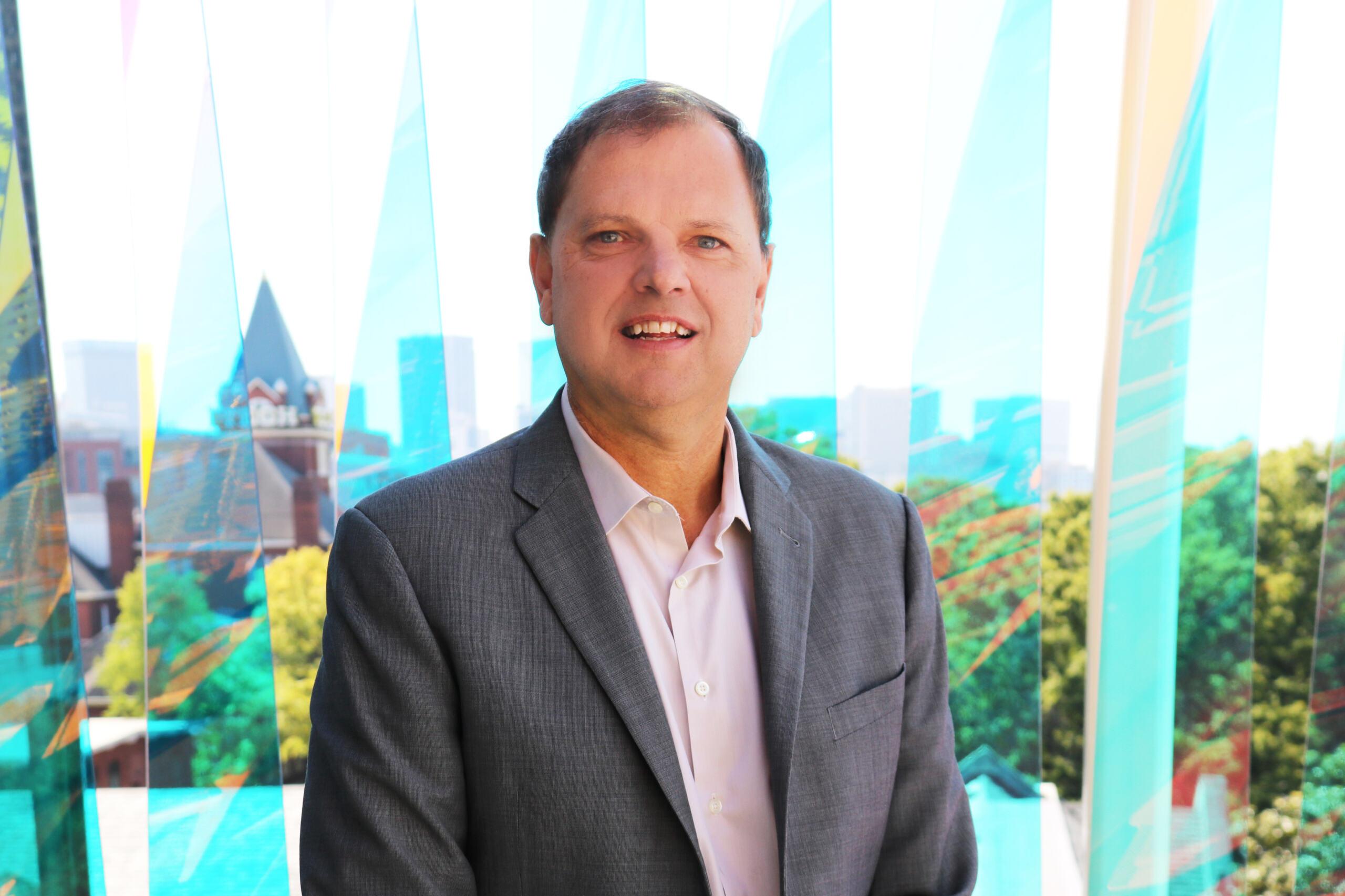
The College of Sciences has named Professor Joel Kostka the inaugural faculty director of Georgia Tech for Georgia's Tomorrow. The new center, announced by the College in December 2024, will drive research aimed at improving life across the state of Georgia.
“Joel is perfectly suited to lead this new initiative, especially since his research for a number of years has focused on Georgia and the vulnerability of both humans and ecosystems to climate change,” says Susan Lozier, dean of the College of Sciences, Betsy Middleton and John Clark Sutherland Chair, and professor in the School of Earth and Atmospheric Sciences. “I look forward to seeing how Science for Georgia’s Tomorrow takes shape and evolves under his thoughtful leadership.”
“I believe that my experience in research administration and in leading multidisciplinary research programs, along with the focus of my research on the vulnerability of Georgia’s communities to climate change, have prepared me well for this role,” says Kostka, who is the Tom and Marie Patton Distinguished Professor and associate chair for Research in the School of Biological Sciences with a joint appointment in the School of Earth and Atmospheric Sciences. “I am excited about the opportunity to lead the center as its inaugural director.”
Kostka’s appointment will begin on May 1, 2025.
Championing science in Georgia
Georgia's Tomorrow was created to foster research related to the health and resilience of Georgia’s people, ecosystems, and communities. Specifically, it will serve to boost research collaboration across the Institute, pave the way for public-private partnerships, and expand opportunities for Georgia students and communities to engage with Institute research.
Among Kostka’s first tasks as faculty director will be the development of the center’s strategic plan and the completion of two dedicated cluster hires from within the College of Sciences’ six schools.
Meet Joel Kostka
Kostka is known for bridging biogeochemistry and microbiology to elucidate the role of microorganisms in ecosystem function. He has emerged as an international leader in ecosystem biogeoscience, providing a quantitative predictive understanding of how ecosystems function as well as determining the mechanisms by which climate change alters ecosystem resilience. He partners with a variety of stakeholders to conduct research on the restoration and adaptive management of coastal ecosystems in Georgia.
Kostka has also served as the PI of a range of multidisciplinary research projects focused on environmental change as well as scientific advisory boards including Georgia Tech’s Strategic Energy Institute, the NSF-funded Plum Island Estuary Long-term Ecological Research program, and the Johnston Center for Coastal Sustainability on Bald Head Island.
Kostka received a B.S. in Biology from Western Illinois University and a Ph.D. in Marine Science from the University of Delaware. Prior to joining Georgia Tech in 2011, he was a professor at the Department of Oceanography and Associate Director of the Institute of Energy Systems, Economics, and Sustainability at Florida State University.
Initial support for Georgia Tech for Georgia’s Tomorrow is generously provided by the College of Sciences Betsy Middleton and John Clark Sutherland Dean's Chair fund. Cluster hire funding has been awarded by Provost Steven W. McLaughlin. The initiative will also seek funding from state, national and international organizations, private foundations, and government agencies to expand impact. Philanthropic support will also be sought in the form of professorships, programmatic support for the center, and seed funding.
Georgia Tech for Georgia's Tomorrow initially launched under the working name Science for Georgia's Tomorrow (Sci4GT).
Writer: Lindsay C. Vidal
Stryten Lead Battery Energy Storage System Installation Ribbon Cutting Ceremony
The Strategic Energy Institute (SEI) and Stryten Energy are excited to announce the completion of the Lead Battery Energy Storage System (BESS) installation. The lead battery energy storage unit, situated directly behind the Carbon Neutral Energy Solutions building on the Georgia Tech campus, will serve as the first living lab battery pilot at Georgia Tech. As an essential component of the Distributed Energy Resources puzzle, this system will play a crucial role in advancing energy solutions research.
Beril Toktay to Lead Brook Byers Institute for Sustainable Systems
Apr 01, 2025 — Atlanta
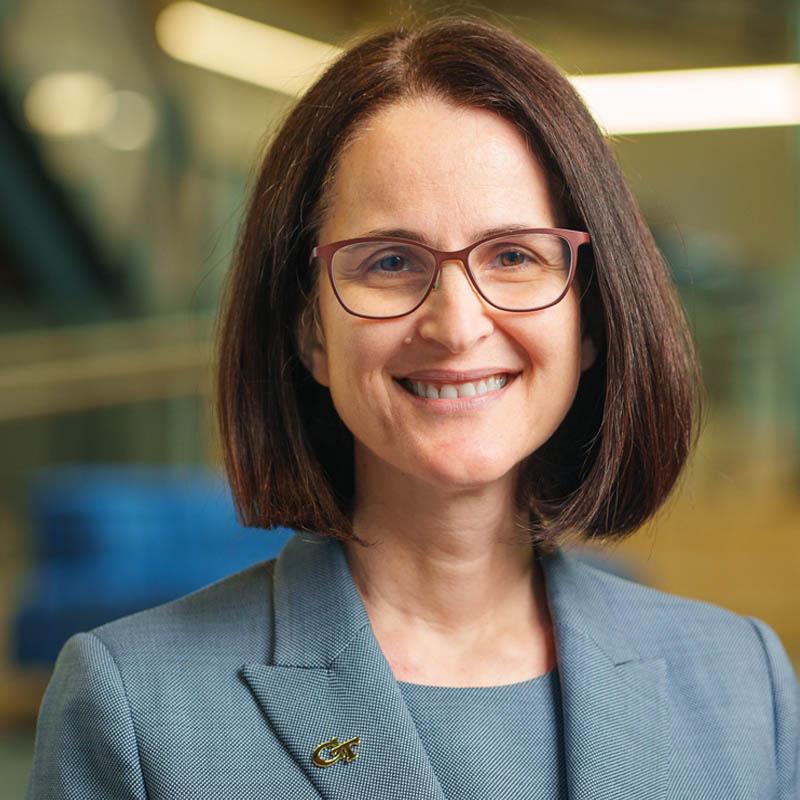
Following a nationwide search, Julia Kubanek, vice president for Interdisciplinary Research at Georgia Tech, has named Beril Toktay as the executive director of the Brook Byers Institute for Sustainable Systems (BBISS). Toktay has served as BBISS interim executive director since September 2022.
“As interim executive director, Beril has built the BBISS community, broadened its scope, and developed new programming to grow cross-disciplinary collaboration, community-engaged research, and entrepreneurship,” Kubanek said. “Faculty and students from the liberal arts, social sciences, design, business, computing, and fundamental science are engaging with BBISS in greater numbers, complementing our engineering community’s involvement. These are areas of strength at Georgia Tech that will help amplify the impact of BBISS.”
Toktay is professor of operations management, the Brady Family Chair, and Regents' Professor at the Scheller College of Business. She is an internationally recognized sustainable operations management scholar whose work has been recognized with multiple best paper awards. She is a Distinguished Fellow of the INFORMS Manufacturing & Service Operations Management (MSOM)Society. Through initiatives such as the Drawdown Georgia Business Compact, she has helped translate research insights into actionable business initiatives while fostering regional economic development.
Her academic leadership includes serving as department co-editor for “Health, Environment, and Society” for MSOM, area editor for “Environment, Energy, and Sustainability” at Operations Research, and special issue co-editor on “Business and Climate Change” for Management Science, as well as “Environment” for MSOM. She serves on the board of the Alliance for Research on Corporate Sustainability and the board of directors of the New York Climate Exchange.
Toktay has been instrumental in advancing sustainability at Georgia Tech, serving as founding faculty director of the Ray C. Anderson Center for Sustainable Business, co-architect of the Serve-Learn-Sustain initiative, and co-chair of the Sustainability Next Institute Strategic Plan Implementation Task Force. Her commitment to Ph.D. student success earned her the 2018 Georgia Tech Outstanding Doctoral Thesis Advisor Award. She also co-developed the Carbon Reduction Challenge, an award-winning interdisciplinary, co-curricular program that engages undergraduate students in climate intrapreneurship.
Toktay holds a Ph.D. in operations research from Massachusetts Institute of Technology, an M.S. in industrial engineering from Purdue University, and a B.S. in industrial engineering and mathematics from Boğaziçi University. She joined Georgia Tech in 2005 after serving as faculty at INSEAD business school in Fontainebleau, France.
Since assuming the interim role, Toktay has significantly strengthened BBISS by expanding the faculty leadership team, securing additional funding, establishing seed grant programs that have benefited over 100 researchers across all Colleges, and transforming the Center for Serve-Learn-Sustain into the Center for Sustainable Communities Research and Education.
"Energy and sustainability continue to be top Georgia Tech research priorities, for which we will need new funding strategies," said Tim Lieuwen, executive vice president for Research. "Philanthropy and business partnerships will grow in importance in the coming years. Beril has considerable experience and vision for maximizing these partnerships, which will serve BBISS and the Institute well into the future."
The Brook Byers Institute for Sustainable Systems is one of Georgia Tech’s interdisciplinary research institutes. The vision of BBISS is to grow and mobilize Georgia Tech’s knowledge assets — people and research — to create a sustainable future for all. BBISS is a key partner in the implementation of Georgia Tech’s Sustainability Next 2023-2030 Strategic Plan, a consensus road map to advance Georgia Tech’s vision to address the biggest local, national, and global challenges of our time. BBISS relentlessly serves the public good, catalyzes high-impact research, develops exceptional leaders, and cultivates partnerships that translate knowledge into practice.
"I'm honored to lead BBISS and build on the momentum we've created to date,” Toktay said. “Our vision is to maximize the collective impact of Georgia Tech's remarkable sustainability research community across all colleges and disciplines. By catalyzing collaborative research and connecting our faculty with key external partners and communities, we are positioning Georgia Tech to be a global thought leader in sustainability and to drive meaningful solutions to some of our most pressing environmental and social challenges."
The campus community is invited to a reception celebrating Toktay's appointment on Thursday, May 1, 2025, at 4:30 p.m. at the Collective Food Hall in the Coda building. Contact Susan Ryan for details.
Brent Verrill, Research Communications Program Manager, BBISS
Earth Month Celebrates Sustainability on Campus
Apr 01, 2025 —
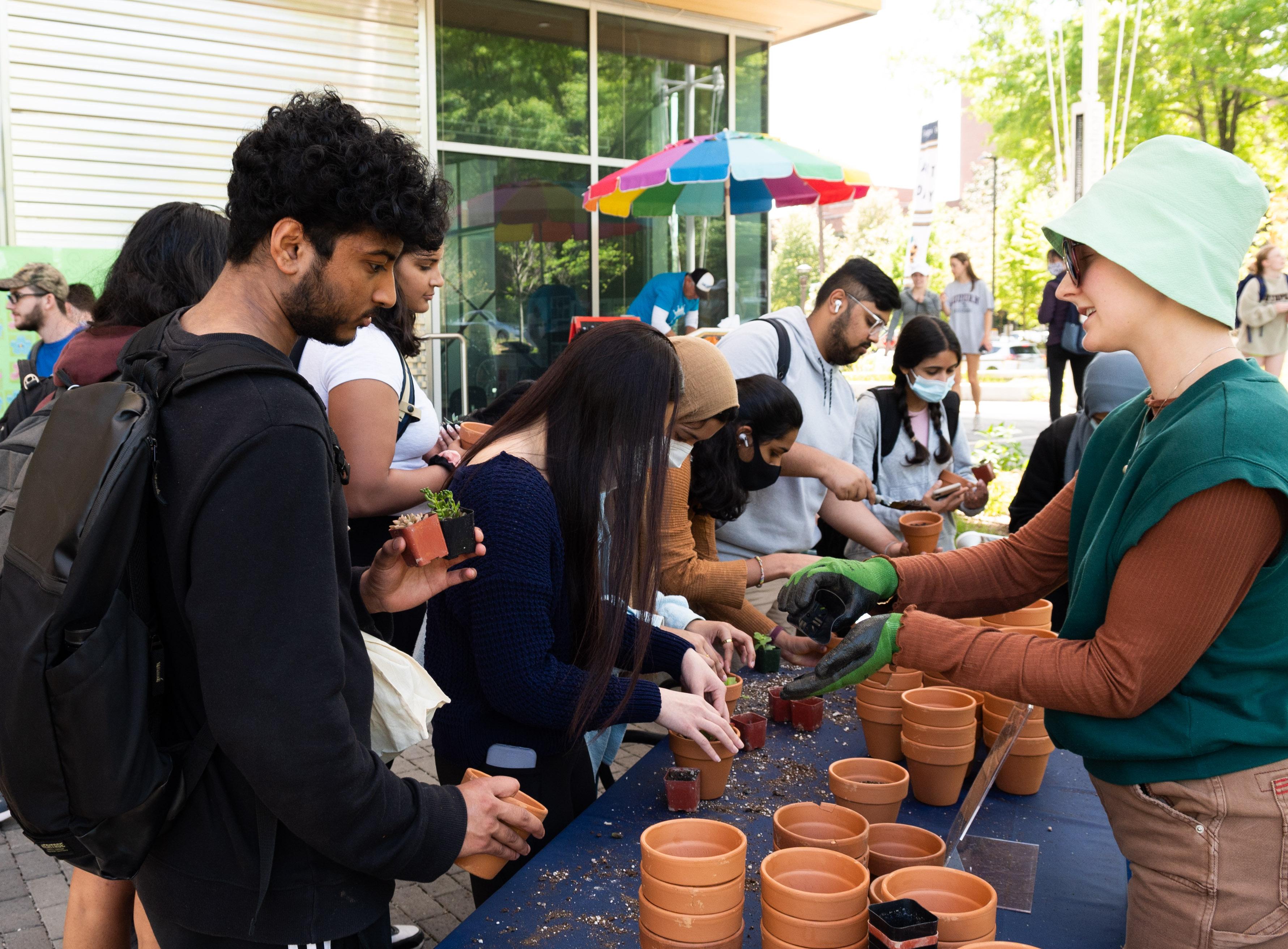
April is Earth Month at Georgia Tech. Coordinated by the Office of Sustainability and organized by partners across campus, it extends the Institute’s observance of Earth Day (April 22) by showcasing campus sustainability efforts and providing opportunities for students, faculty, and staff to learn and engage.
Many organizations and departments across campus will host events throughout the month. In addition to the annual Earth Day Organization Fair and Celebration on April 17, the Office of Sustainability will host a session on campus energy and several outdoor tours throughout the month, including a bird walk, mushroom identification tour, and arboretum tour. Campus organizations are encouraged to share their sustainability-focused events through the Earth Month event form.
Featured Event: Earth Day Sustainable Org Fair and Celebration
Thursday, April 17, 11 a.m. – 1 p.m.
Porch, The Kendeda Building for Innovative Sustainable Design
This annual signature event features tabling from sustainability-focused departments and student organizations, a free yoga session from 11:30 a.m. to 12:30 p.m., sustainable crafts, and treats.
Sign up here to table at the celebration.
Earth Month Events
Carbon Reduction Challenge – April 1 Info Session
- Tuesday, April 1, 11 a.m. – noon.
- Host/Contact: Kjersti Lukens, Ray C. Anderson Center for Sustainable Business, klukens3@gatech.edu.
Mushroom Identification Tour
Discover the fascinating world of mushrooms with our expert guides from Kennesaw State University’s Field Station and the president of the Georgia Mushroom Society.
- Friday, April 4, 10 a.m. – noon.
- Location: Meet at The Kendeda Building Porch.
- Host: Office of Sustainability.
Sustainability Network Meeting
- Tuesday, April 8, 11 a.m. – noon.
- Location: Centennial Room, Exhibition Hall.
- Host: Tech Dining, Campus Services.
- Treats provided.
SMART Campus Forum Series: Clean Energy
- Thursday, April 10, noon – 1 p.m.
- Location: Online.
- Host: Office of Sustainability.
Bird Walk
Join Georgia Tech Birdwatchers for a campus walk to study birds in their natural habitat.
- Friday, April 11, 8:30 – 10 a.m., with donuts and juice provided at 8 a.m.
- Location: Meet at The Kendeda Building Porch.
- Host: Office of Sustainability.
Careers in Sustainability: April Listening Session
- Monday, April 14, 11:30 a.m. – 12:30 p.m.
- Host/Contact: Kjersti Lukens, Ray C. Anderson Center for Sustainable Business.
Earth Day: Has the Economy Outgrown the Planet?
- Thursday, April 17, 11 a.m. – noon
- Location: The Kendeda Building Auditorium.
- Host/Contact: Dori Pap.
Garden to Table Food Demo With Tech Dining
- Thursday, April 17, 11 a.m. – 1 p.m.
- Host: Campus Services
Arboretum Walking Tour
Join us for an enlightening arboretum tour and enjoy a guided walk through the Georgia Tech campus with Infrastructure and Sustainability’s Jason Gregory, Institute landscape architect, and Jerry Young, landscape project manager.
- Friday, April 18, 10 – 11:30 a.m.
- Location: Meet at The Kendeda Porch.
- Host: Infrastructure and Sustainability.
Carbon Reduction Challenge Info Session
- Friday, April 18, 11 a.m. – noon.
- Host/Contact: Kjersti Lukens, Ray C. Anderson Center for Sustainable Business.
Carbon Reduction Challenge Poster Session
- Friday, April 18, 2 – 4 p.m.
- Location: Ground Floor, The Kendeda Building for Innovative Sustainable Design.
- Host/Contact: Jairo Garcia.
Environmental Influence on Fashion (Fashion Show)
- Friday, April 18, 7 – 8:30 p.m.
- Location: The Kendeda Building Auditorium.
- Host: Spring 2025 Textiles Team.
- RSVP.
Georgia Tech Energy Day
- Wednesday, April 23, 9 a.m. – 6 p.m.
- Location: Ferst Center for the Arts (morning), Georgia Tech Exhibition Hall (afternoon).
- Hosts: Institute for Matter and Systems; Strategic Energy Institute; Advanced Battery Center; Energy, Policy, and Innovation Center.
Additional events, volunteer opportunities, and the sign-up form to share your event with the Earth Month calendar are posted on the Earth Month page.
Drew Cutright - Office of Sustainability