Tim Lieuwen: Shaping the Future of Research at Georgia Tech
Lieuwen enters the role of interim EVPR with plans to focus on research security and operational excellence and to strengthen the Institute’s ties to Georgia and the Southeast.

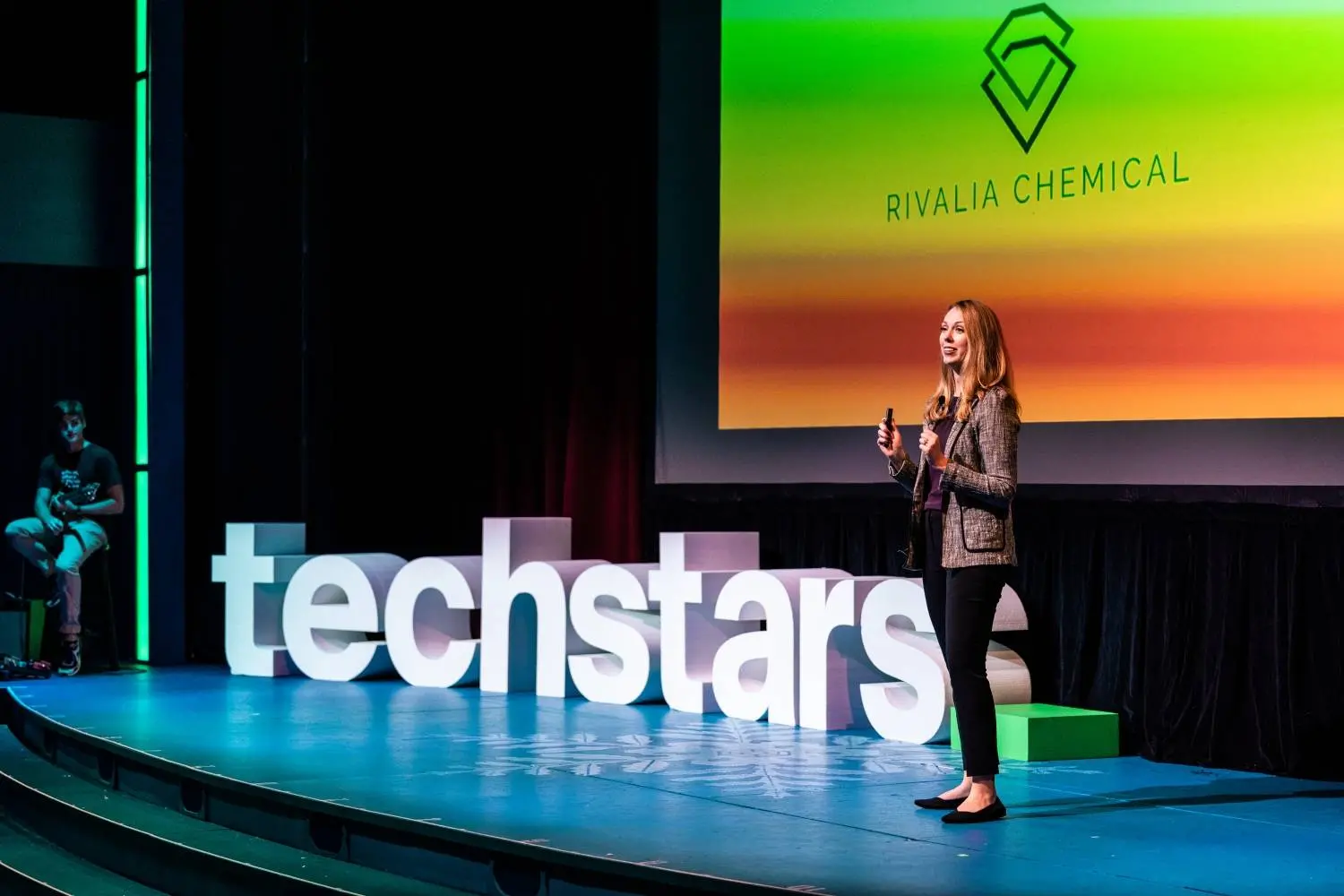
Laura Stoy gives a presentation as part of the Techstars Alabama EnergyTech Accelerator.
Since leaving Georgia Tech, Laura (Mast) Stoy, PhD EnvE 21, has continued to pursue her research, this time as an entrepreneur.
The environmental engineering graduate founded Rivalia Chemical Co. with her sights set on commercializing her work as a PhD student. Over the past two years, Stoy has been selected for a competitive business incubator and a prestigious fellowship for entrepreneurs.
Stoy and her advisor, Turnipseed Family Chair and Professor Ching-Hua Huang, discovered that by applying an ionic liquid directly to solid coal fly ash, rare-earth elements (REEs) can be successfully removed in a safe process that creates little waste.
REEs are a set of elements that are necessary to manufacture technology like smart phones and LED screens, and play important roles in clean tech applications like electric vehicles and wind turbines.
Melissa Fralick (melissa.fralick@ce.gatech.edu)

Tim Lieuwen, Executive Director of SEI
The National Academy of Engineering (NAE) chose Adjunct Professor and alumnus Tim Lieuwen, M.S. ME 1997, Ph.D. ME 1999, to give a keynote address about net zero pathways in the U.S. energy system as part of the 2023 Global Grand Challenges Summit. Lieuwen’s talk, which took place on September 19, surveyed transitions of the three major elements of the energy system — energy sources, energy carriers and storage, and energy users. He discussed how these elements will evolve as the U.S. decarbonizes, including current modeling results for the lowest-cost mix of energy sources and carriers.
Lieuwen is the interim chair of the Daniel Guggenheim School of Aerospace Engineering; Regents’ Professor; the David S. Lewis, Jr. Professor; and the executive director of the Strategic Energy Institute.
Jason Maderer (maderer@gatech.edu)

Professor Chris Jones
Professor Christopher Jones was selected as the recipient of the 2023 Institute Award for Excellence in Industrial Gases Technology from the American Institute of Chemical Engineers. (AIChE).
Jones, the John F. Brock III School Chair of Georgia Tech's School of Chemical and Biomolecular Engineering (ChBE@GT), will receive the award at the AIChE meeting in Orlando, Florida, this November.
This award recognizes his contributions to ultra-dilute CO2 separations, such as the extraction of CO2 from air, also referred to as “direct air capture” or DAC. The Jones group has played a foundational role in developing materials and processes for CO2 removal from air, and in conjunction with the Lively, Realff, Sholl, and other groups in ChBE@GT, no academic institution has authored more publications on DAC than Georgia Tech.
Professors Jones, Matthew Realff, and Ryan Lively are founding members of the Georgia Tech Direct Air Capture Center, or DirACC.
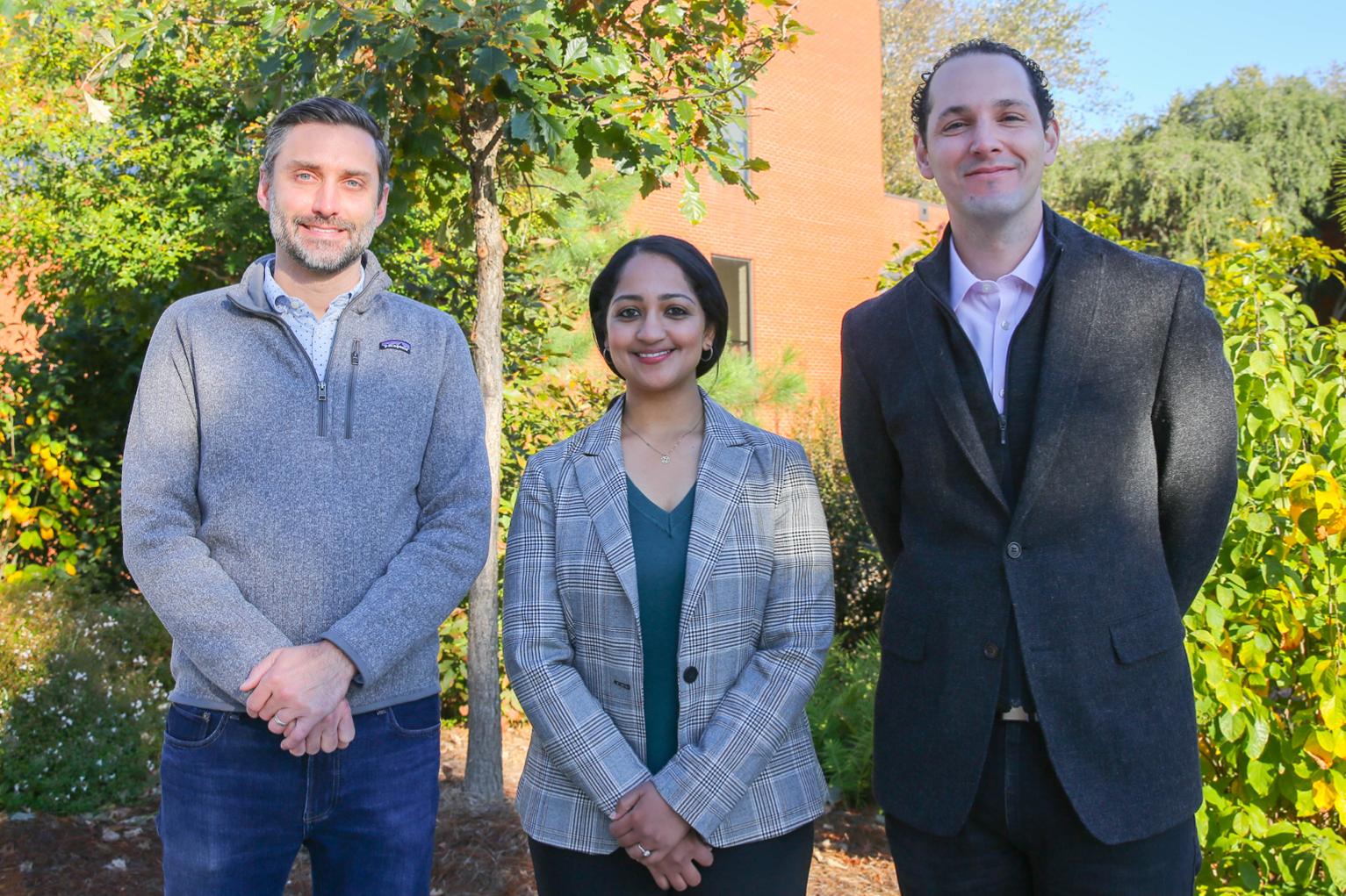
Pictured left to right: Associate Professor Matthew McDowell (ME), Assistant Professor Akanksha Menon (ME), and Assistant Professor Claudio Di Leo (AE).
Akanksha Menon, assistant professor in the George W. Woodruff School of Mechanical Engineering, has been awarded $3 million in funding from the Department of Energy (DOE) as part of their Energy Earthshots™ Initiative to advance clean energy technologies within the decade.
The initiative includes a total of $264 million in funding that will support 11 new Energy Earthshot Research Centers (EERCs) led by DOE National Laboratories and 18 university research teams addressing one or more of the specific Energy Earthshots™ that aim to accelerate affordable and reliable clean energy solutions to mitigate the climate crisis to reach a net-zero carbon goal in 2050.
Menon's project, titled Thermo-Chemo-Mechanical Transformations in Thermal Energy Storage Materials and Composites, will bring together Matthew McDowell, associate professor in the Woodruff School, Claudio Di Leo, assistant professor in the Daniel Guggenheim School of Aerospace Engineering, and Jeff Urban from the Lawrence Berkeley National Laboratory, to provide a fundamental understanding of the coupled thermo-chemo-mechanical phenomena in thermal energy storage (TES) materials that will enable low-cost and stable storage.
Chloe Arrington
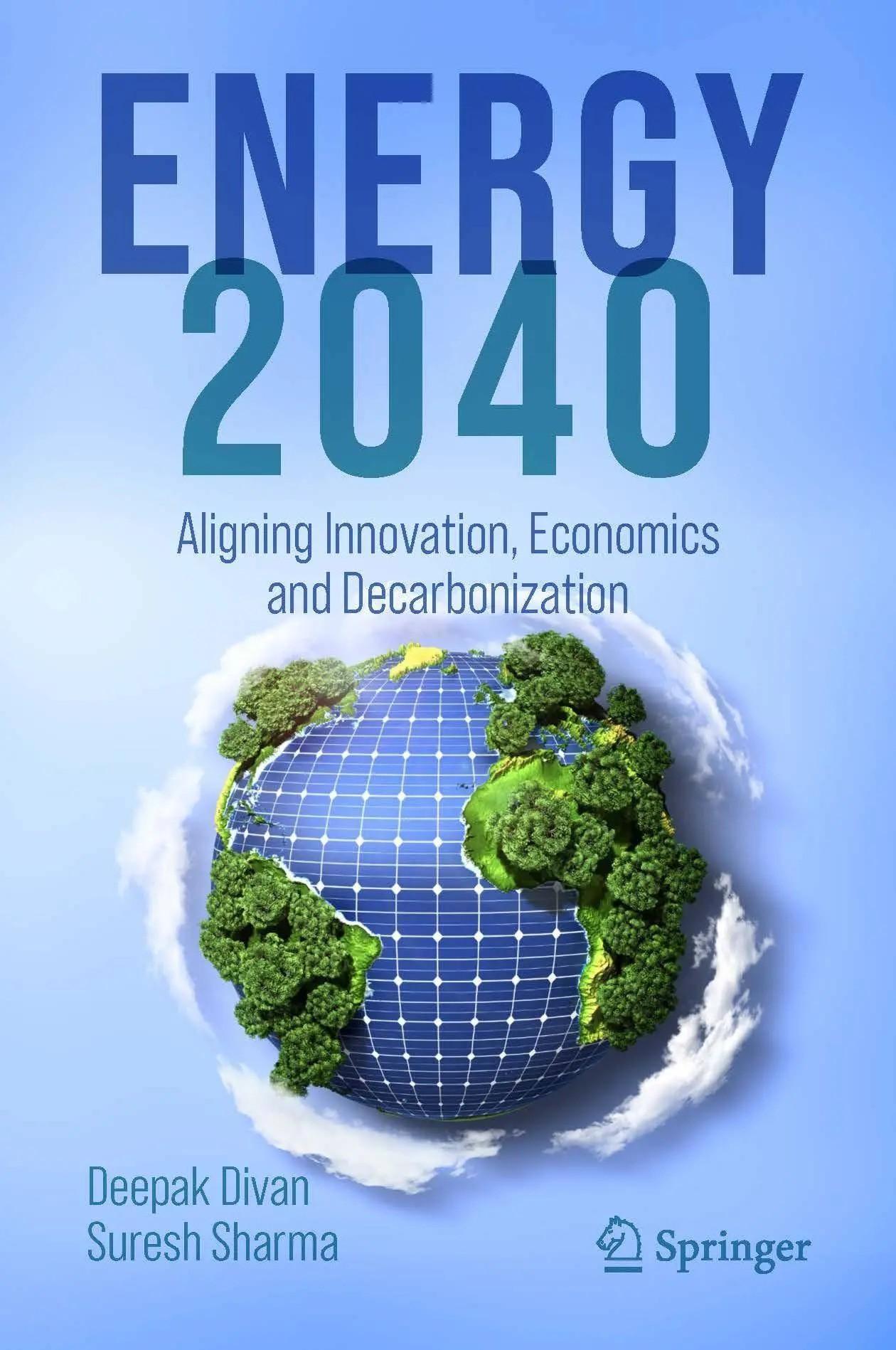
ENERGY 2040: Aligning Innovation, Economics and Decarbonization" was published by Springer in April 2024.
Deepakraj Divan and Suresh Sharma experts in energy technologies and entrepreneurship, shed light on the challenges and opportunities in bringing disruptive technologies to market in their new book “ENERGY 2040: Aligning Innovation, Economics and Decarbonization”.
In an insightful interview, Divan, a Georgia Research Alliance Eminent Scholar and director of the Center for Distributed Energy (CDE) in the School of Electrical and Computer Engineering, and Sharma, an entrepreneur in residence at CDE, trace the historical roots of the current energy landscape, highlighting missed opportunities and gaps in understanding, and emphasizing the energy transition as a paradigm shift to offer insights into how to navigate it effectively.

Martha Grover
School of Chemical and Biomolecular Engineering (ChBE) faculty member Martha Grover has been named the College’s Thomas A. Fanning Chair in Equity Centered Engineering. Grover was selected for her efforts to educate engineers who approach their work with an intent to close societal gaps of wealth, power, and privilege by ensuring equitable access to opportunity.
The endowed position was established via the Southern Company Foundation by Southern Company, which has been regularly recognized for its efforts to promote an organizational culture that ensures representation of all groups. Fanning recently retired as chairman, president, and CEO.
Grover is a systems engineer whose work addresses the complexity of molecular organization and how it can solve complicated grand challenges. For instance, she has worked with the Department of Energy for 10 years to create processes for separation and immobilization of millions of gallons of liquid nuclear waste at the Hanford Site in Washington and the Savannah River Site in South Carolina. She’s developed real-time process monitoring of nuclear waste slurries to increase throughput and enhance safety.
Grover’s research also focuses on the origins of life and understanding the essential role of diversity and cooperation. Her other work includes modeling and engineering the self-assembly of atoms and small molecules to create larger scale structures and complex functionality.
Jason Maderer (maderer@gatech.edu)
College of Engineering, Georgia Tech

Dan Molzahn
Dan Molzahn, assistant professor in the school of electrical and computer engineering and SEI initiative lead for the Energy Club received the outstanding teacher award from the College of Engineering (COE) as a part of its third annual Faculty awards. COE honored eight faculty members for their excellence in research, service, teaching, inventorship, and commercialization.
In addition to his research on energy systems, Molzahn has a goal of educating the next generation of electric power engineers. For instance, he leads a 30-student Vertically Integrated Projects (VIP) team that develops video game simulations of power grids operating during extreme events. A first iteration of the game currently is installed at the Georgia Tech Dataseum in the Price Gilbert Library and plans are underway to incorporate a version into next year’s Seth Bonder high school summer camps.
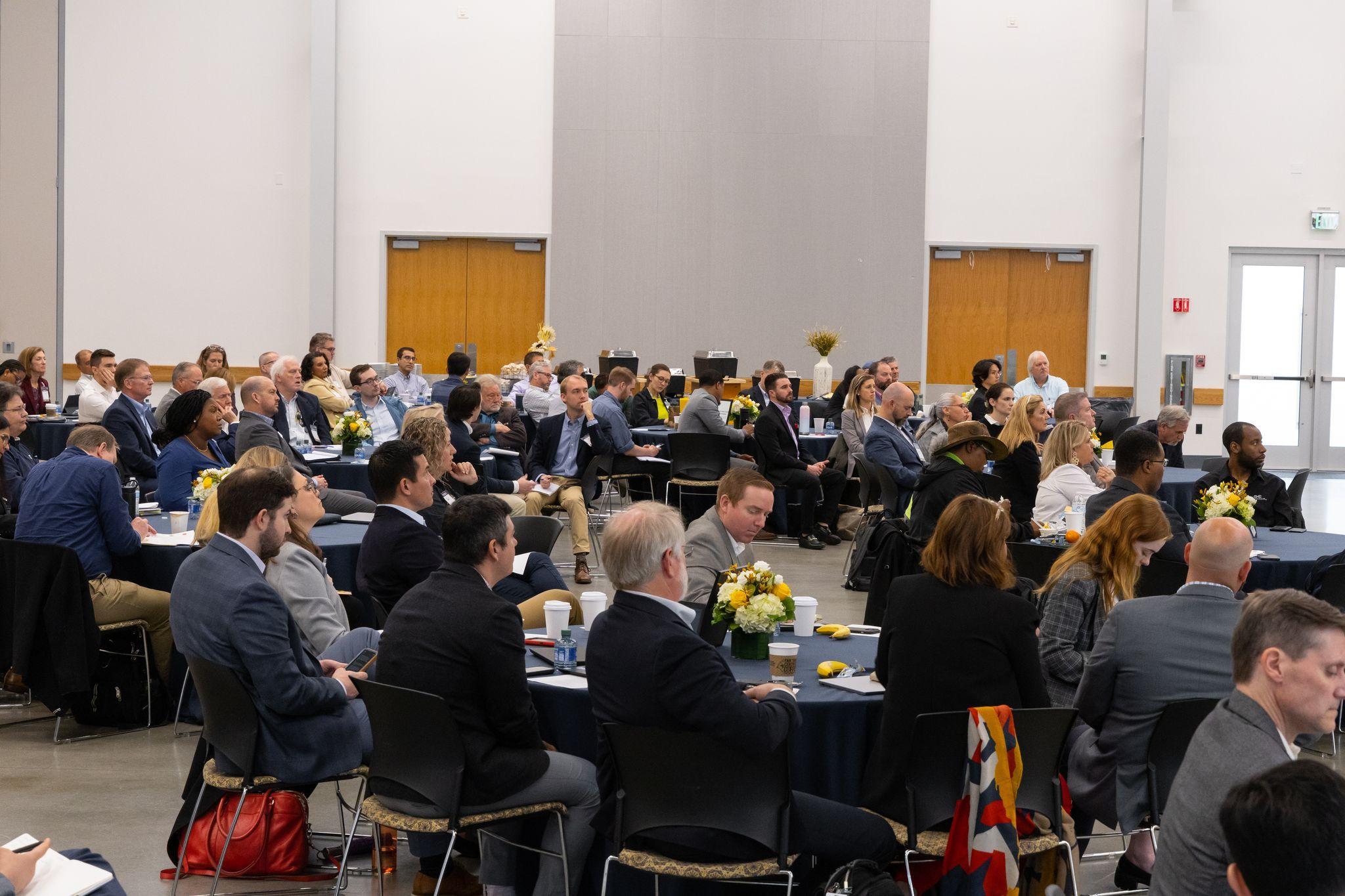
Attendees at the Georgia Beneficial Electrification Leadership Summit
The Energy Policy Innovation Center (EPICenter), along with the Beneficial Electrification League and Wells Fargo, hosted the Georgia Electrification Leadership Summit on the Georgia Tech campus. More than 140 people from the energy industry participated in the highly engaged event that included discussions on innovations and challenges in electrification in the transportation, residential, and industrial sectors. Additionally, the event addressed the economic development that the recent federal funding in the energy area is expected to bring to the state of Georgia.
The event began with a virtual welcome address by Georgia U.S. Sen. Jon Ossoff, followed by an introduction by Joe Hagerman, the director of EPIcenter, that operates within the Strategic Energy Institute at Georgia Tech. EPICenter was created to provide an unbiased and interdisciplinary framework for stimulating innovation in energy policy and technology for the Southeast region. Keith Dennis, founder and CEO of the Beneficial Electrification League, engaged the audience with his presentation on the benefits of electrification, followed by key energy industry leaders from the state of Georgia discussing their viewpoints on electrification opportunities in their industry. The morning keynote by Bentina Terry, senior vice president of Customer Strategy and Solutions at Georgia Power, brought focus on the everyday customer. Terry said they can be swayed with energy solutions only if the solutions providers advocate the benefits through the lens of the consumer.
The stakeholder dialogue on electric transportation included Georgia Public Service Commissioner Tim Echols, who emphasized that the state of Georgia needs to focus on expanding the state’s transportation infrastructure to meet the rising EVs on Georgia roads and the urgent need for electrification in transportation. Richard Simmons, director of Research and Studies at the Strategic Energy Institute, also brought home the fact that transportation sector has caught on to the benefits of electrification more than any other sector in the country. GDOT team member in the discussion revealed the timeline of the National Electric Vehicle Infrastructure (NEVI) program that has $135 million in funds apportioned to the state of Georgia.
On electrification in residential homes, panelists including Anita Moreno, Michelle Moore and Andrea Pinabell shared different perspectives and examples of the huge impact electrification has in residential homes, especially in low and moderate income and rural communities of Georgia.
The team from the Georgia Environmental Finance Authority, an entity that funds environmental infrastructure projects in the state, discussed the historical funding coming through the Infrastructure Investment and Jobs Act (Bipartisan Infrastructure Law) and Inflation Reduction Act. With more than $300 million coming through the Georgia State Energy Office and most of the funding residential focused, the team discussed the challenges and consumer expectations and how they ensure projects that get funded save money and lead to client satisfaction.
Stakeholder dialogue on electrification of commercial technology included Chandra Farley, the chief sustainability officer of the City of Atlanta, who discussed decarbonization of public buildings, training the workforce, and electrification of the public fleet, while advancing the city’s goal to achieve 100% clean energy by 2035. Panelists also discussed heat pumps as a cost-effective method of supplying low-temperature heat for industrial processes and the advantages of industrial heat pumps over combustion technologies for electrification and energy efficiency.
“At EPICenter, we leverage Georgia Tech’s expertise and innovation to help inform energy policy and technology for the Southeast,” said Hagerman. “The GA Electrification Leadership Summit is another example of how we have brought together diverse stakeholders to foster collaboration and dialogue on Georgia’s energy future. EPICenter will continue to support electrification, energy access, and deep community engagement. Georgia Tech and EPICenter can play an outsized role in helping the Southeast achieve a vibrant, clean, and competitive energy future for all Georgians.”
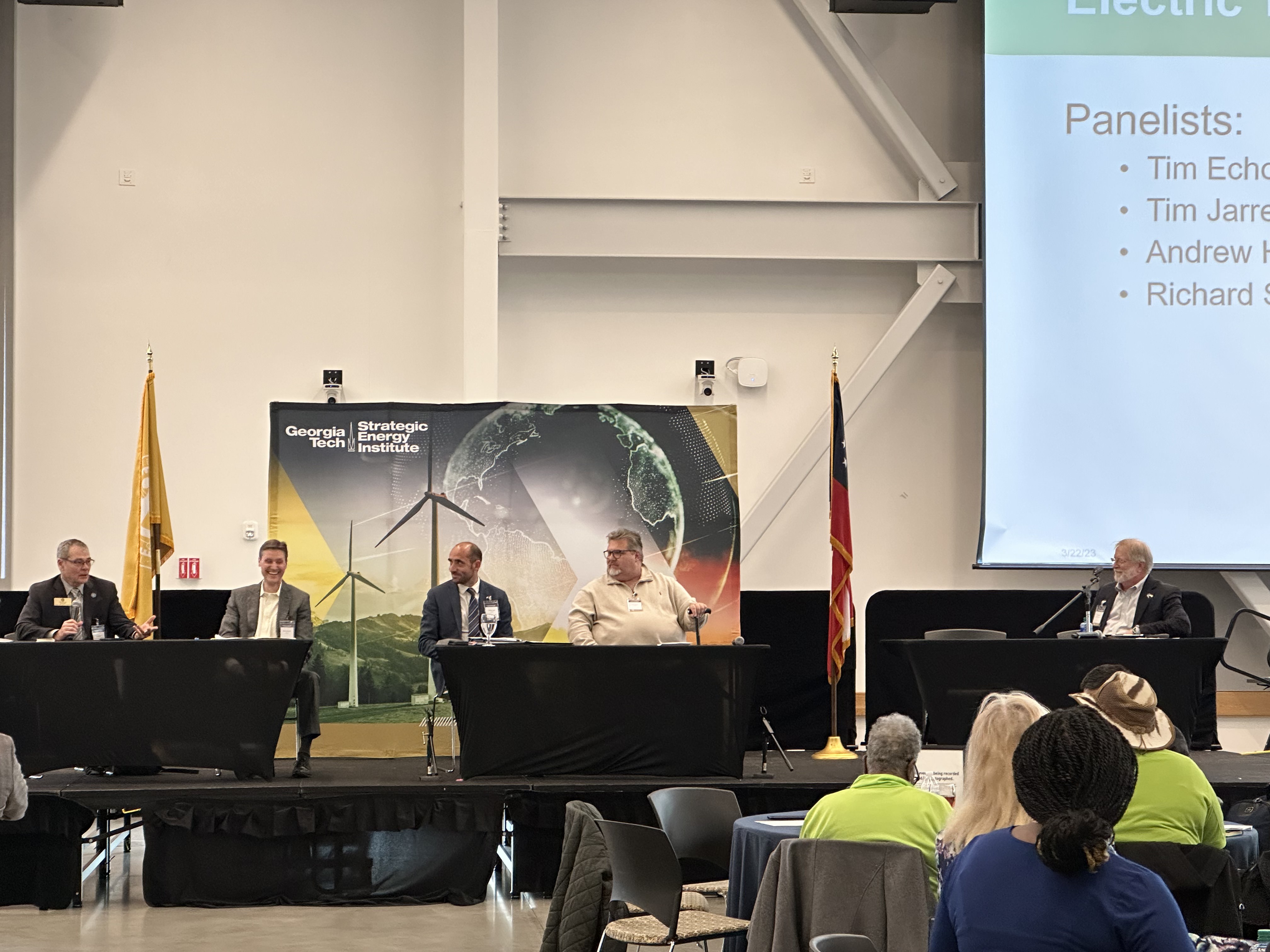
Panelists at the GA Electrification Leadership Summit
Priya Devarajan || SEI Communications Manager
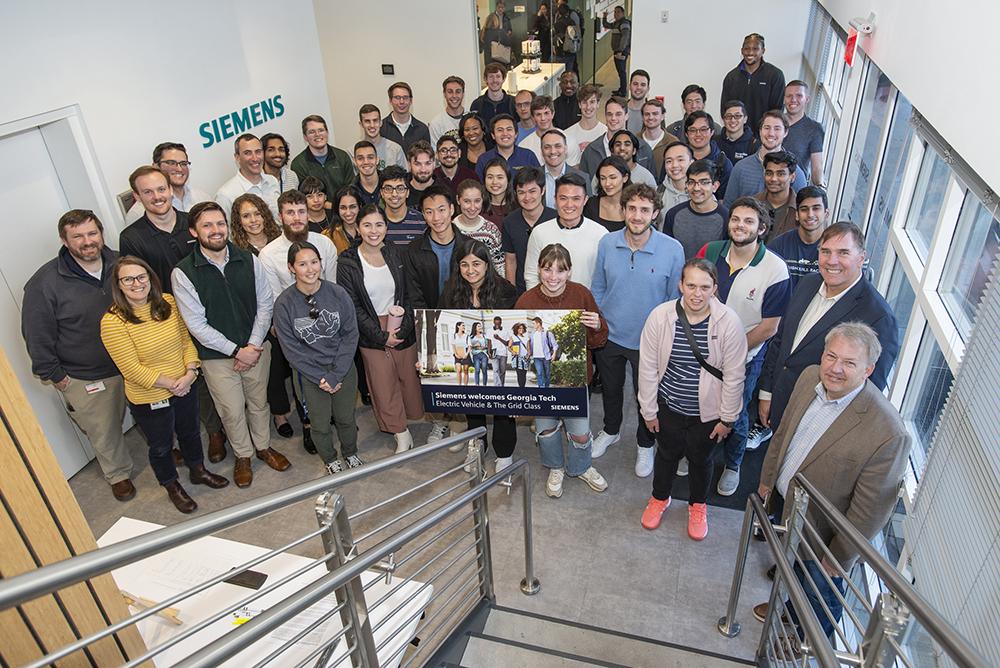
Woodruff School Partners with Siemens to launch new course
Over 9% of global passenger vehicle sales last year were electric vehicles (EVs) according to Bloomberg New Energy Finance. EV sales are surging due to a combination of policy support, improvements in battery technology, more charging infrastructure, and new compelling vehicles from automakers.
To address the rapid growth in the EV industry, the George W. Woodruff School of Mechanical Engineering has partnered with Siemens to offer a new course, Electric Vehicles & the Grid. The course launched in the spring semester and is providing a transformative learning experience to Georgia Tech students while preparing them to charge into the future.
With a focus on innovation and sustainability, Electric Vehicles & the Grid teaches engineering principles of electric transportation and the energy infrastructure. The class also covers the emerging technologies of batteries, renewables, and connectivity that will allow further optimization of the products with the grid.
Although EV courses are taught across the nation, the class's additional focus on the grid is a component that is missing from courses taught at other institutions.
Read Full Story on the George W. Woodruff School of Mechanical Engineering Website