Three Lessons Towards Ethical Tech

SPEAKER

Casey Fiesler, Ph.D.
Associate Professor, Information Science
University of Colorado Boulder

MLK Jr. National Holiday

Georgia Tech will be closed in observance of the M.L.K, Jr. National Holiday.

CEAR Hub Hosts International Seminar on Community Resilience

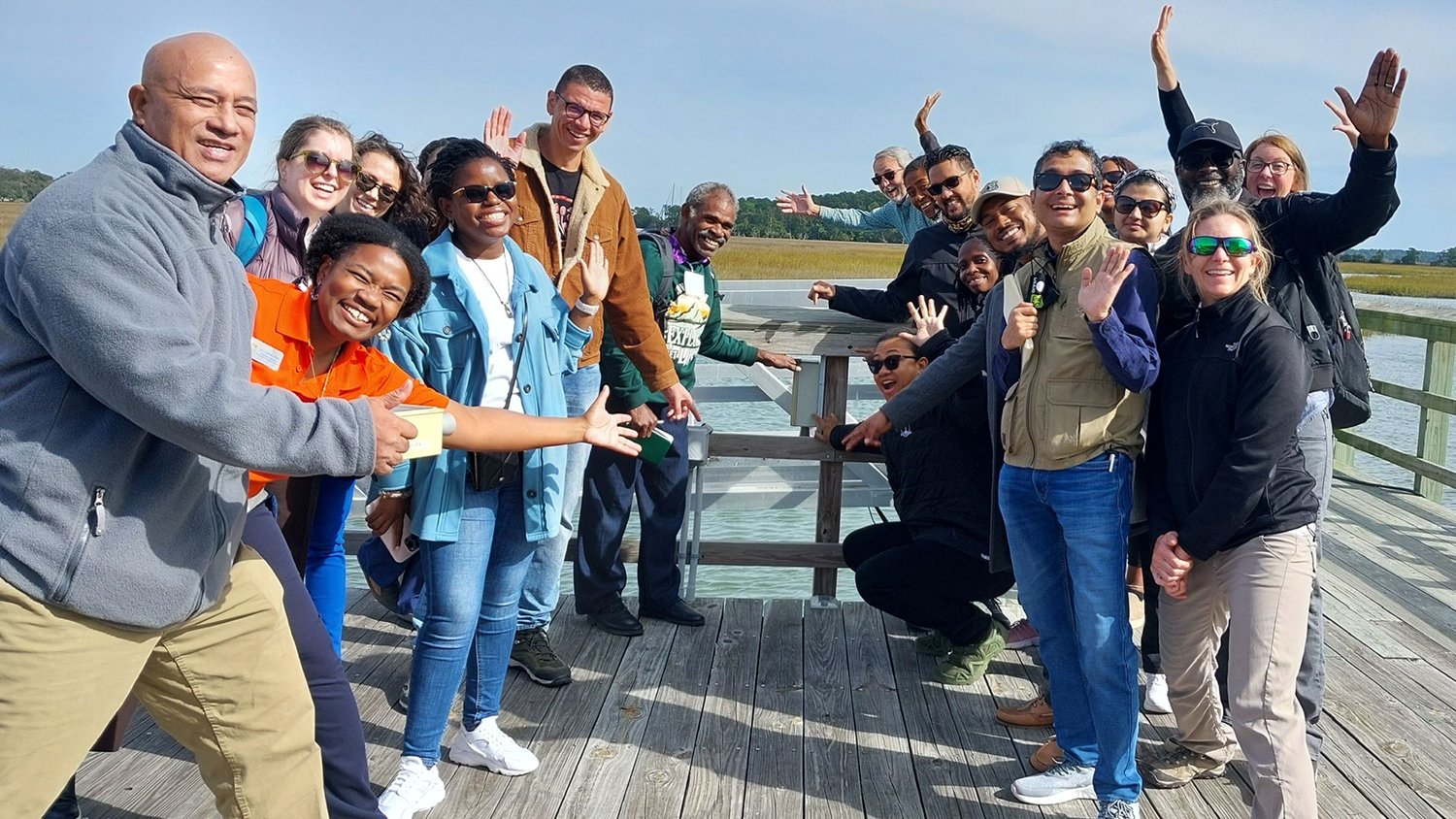
CEAR Hub Group Photo-Dec-2023

CEAR Hub Group Photo with International Visitors: Dec-2023

The CEAR Hub recently partnered with the U.S. Forest Service to host a two-week international seminar on community resilience. The seminar provided training to 11 community leaders from Honduras, Bangladesh, Samoa, Mozambique, Solomon Islands, Fiji, Tanzania, Nepal, Belize, and Brazil. The participants spent one week in Atlanta and one week in Savannah, learning strategies for building social, environmental, and economic resilience. Numerous CEAR Hub projects were featured as case studies in the seminar, including the Hub’s smart sea-level sensor network in coastal Georgia; emergency management support in Chatham County, GA; resilience planning work in the Gullah Geechee community of Pin Point (Savannah, GA); community garden development and youth engagement in Hudson Hill (Savannah, GA); K-12 education programs at Savannah State University; and environmental health research in Brunswick, GA. Through these examples, participants gained a deeper understanding of climate adaptation options, nature-based solutions, equitable community engagement, and the importance of collaboration in achieving community resilience.

The CEAR Hub lead principal investigator is Russell Clark, senior research scientist at the Georgia Institute of Technology and faculty member of the Institute for People and Technology (IPaT). Several members of the CEAR Hub team are affiliated with IPaT.


About the CEAR Hub
Coastal flooding, extreme heat, and other climate hazards are growing threats to communities throughout Georgia’s coast. These threats are especially critical for historically marginalized groups, who often face the most severe impacts and have the least ability to cope.

CEAR Hub is a project that joins community organizations, local governments, and educational institutions together to develop the knowledge, tools, and strategies that make our communities more resilient. CEAR Hub partners work alongside members of vulnerable communities to create fair and just solutions to the climate challenges through community-led research, training, and outreach.

 

Convergence Innovation Competition Names Two Winners

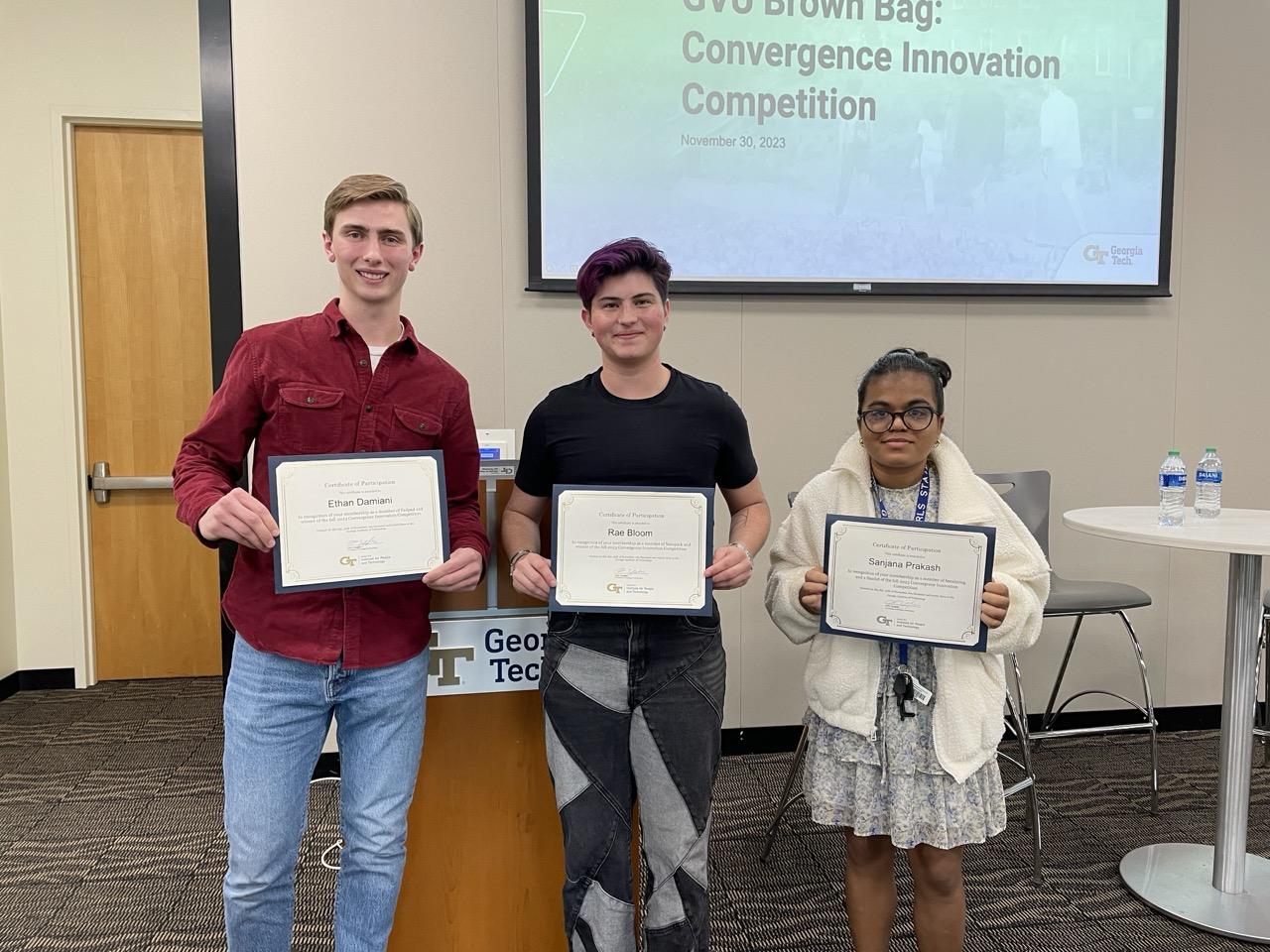
CIC winners and finalist fall 2023

(left-to-right) Ethan Damiani, Rae Bloom (CIC fall 2023 winners) and Sai Sanjana Prakash (finalist).

Both fadpad and NaloPack won this year’s Georgia Tech Convergence Innovation Competition (CIC) for fall 2023. The CIC judges felt both teams deserved to be named winners based on their innovative ideas. Sponsored twice every year by Georgia Tech’s Institute for People and Technology (IPaT), the Convergence Innovation Competition is dedicated to helping students create and showcase innovative, viable products and experiences with the support of campus and industry resources along with guidance.

Fadpad is a multilayered add-on that goes directly on top of a menstrual pad to collect a blood sample. The blood sample is then shipped to a lab for testing. The fadpad team has shown that their approach can effectively detect biomarkers present in diseases like HPV, HIV, and other sexually transmitted infections. They recently earned one of the top prizes at the 2023 Collegiate Inventors Competition at the National Inventors Hall of Fame.

The fapad team includes Rhea Prem, who graduated with a bachelor of science in computer engineering; Netra Gandhi, who graduated with a bachelor of science in biomedical engineering; Ethan Damiani, who will graduate with a bachelor of science in biochemistry this fall; and Girish Hari, who will be completing a master of science in computer science this fall. Each team member will win a cash prize for winning.

NaloPak is a design-driven carry sling bag allowing a wearer to quickly access two Naloxone nasal sprays to quickly reverse an opioid overdose. The specially designed bag system also advertisers that the wearer is carrying this lifesaving medicine. Instructions to use Naloxone are also highly visible if the medicine needs to be rapidly deployed to save a life.

NaloPak was envisioned by Rae Bloom who is an undergraduate industrial design student graduating next spring 2024. By winning, Bloom will gain entry into the Georgia Tech CREATE-X program along with a cash prize. Fadpad has already participated in the CREATE-X program at Georgia Tech.

This year’s sole finalist was a product application named “becalming.” The future vision of her app is to combat bad mental health practices. It’s a product that is still in the early stages of design and development. Becalming is spearheaded by Sai Sanjana Prakash, who is pursuing a bachelor of science in both biomedical engineering and computer science.
 

This year’s fall 2023 competition judges were:

  • Russell Clark, Institute for People and Technology at Georgia Tech
  • Rahul Saxena, CREATE-X at Georgia Tech


News Contact

Convergence Innovation Competition Finalist Showcase

The finalist teams for the Convergence Innovation Competition (CIC) will highlight their projects, discuss their experience participating in the competition, and winners will be announced.

Craft Lab Hosts Student Community-building Event

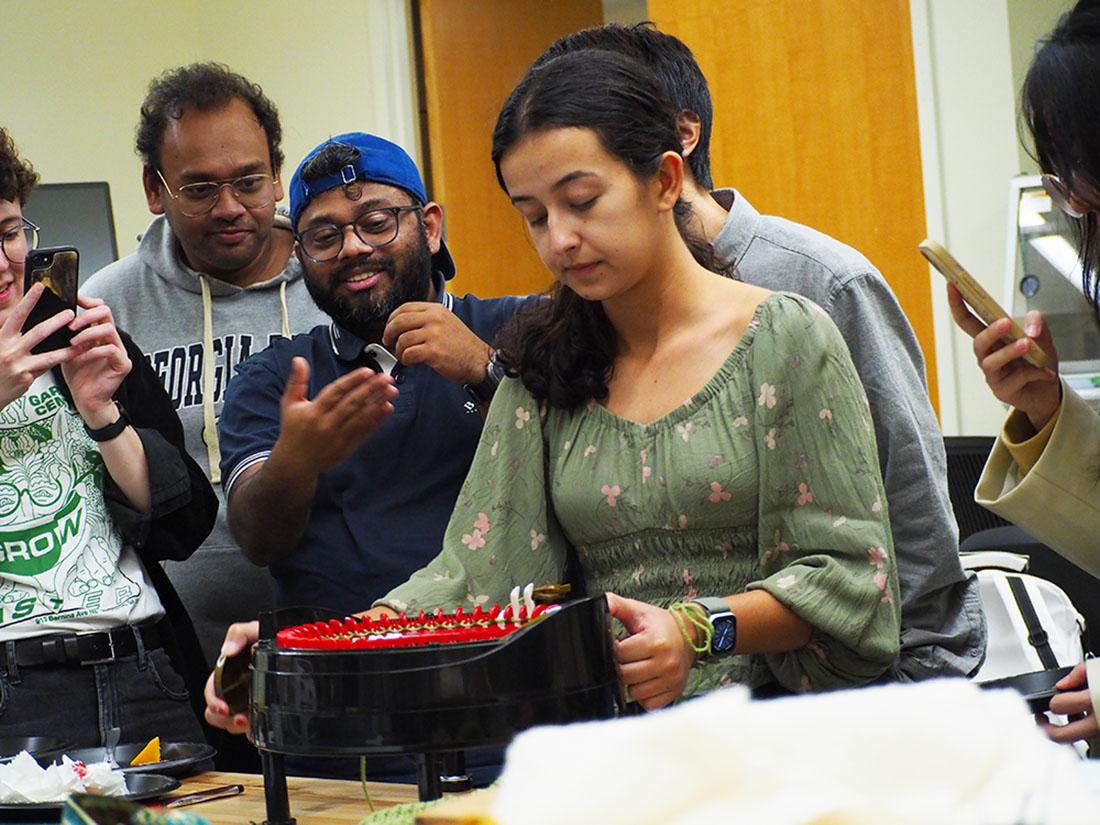
Foley Scholar MS Arianna Mastali (MS-HCI) demonstrates the use of the Craft Lab knitting machine.

Foley Scholar MS student Arianna Mastali (MS-HCI) demonstrates the use of the Craft Lab knitting machine.

Mid-November’s autumn transition foreshadows the stress of preparations for the Thanksgiving holiday, the imminent wrap up of final projects, and the near-term arrival of final exams as the end of the semester approaches. To alleviate some of the forthcoming stress, Hannah Hendricks, a master’s student in digital media (DM), and Allie Teixeira Riggs, a doctoral student in DM, hosted a fun community event for DM students using the Institute for People and Technology’s (IPaT) Craft Lab resources.

The purpose of the event was to let students relax, decompress, bond, and gain new insight into the capabilities of the Craft Lab which provides equipment such as industrial sewing machines, knitting and embroidery machines, 3D printers, and a number of other tools. Tim Trent, manager of the Craft Lab, and Arianna Mastali, a graduate research assistant in the lab, hosted 12 DM students at this community event.

Student feedback from the event included:

  • “It was a supersensory experience for me. Throughout my life, I feared the sewing machine, but the experience yesterday of understanding the mechanics of it and the wonderful workings of the sewing machine after using it has made me mindful of the possibilities. Also, the aspect of community building through knitting is an exciting concept and takeaway.”
  • “The [Craft Lab] experience was transformative, I learned quite a few things, and it was a safe space to be outside my comfort zone in terms of trying out something new. It was a great opportunity to meet new people within different fields of expertise.”
  • “It was interesting to learn about and see a nitty gritty industrial sewing machine and the rotational knitting machine. I learned more about the equipment in the Craft Lab.”
  • “I liked the bringing people together aspect of the event, sharing what we know, crafts we have done, and the digital media/computational craft we can do [using the lab].
  • “I could definitely see this event happening again where we meet and do a particular craft for a day.”

“It is incredibly rewarding to see student-led events like this happen,” said Trent. “When I first envisioned the Craft Lab, I was excited by the potential to take equipment that was already being used for research and open its accessibility and use to create a community space for folks to explore and learn new things. The feedback and energy over the past year, as seen in events like this DM student night, have re-affirmed the importance of the lab spaces IPaT provides, and I'm excited to see where we can progress forward.”
 

About the Craft Lab:
The Craft Lab is a unique makerspace sponsored by IPaT which is designed to promote craft and algorithmic making. The equipment in the lab is particularly well-suited for wearable/flexible electronic systems and is available to anyone interested in making soft objects. The lab includes equipment like sewing machines, CNC knitting and embroidery machines, soldering irons, and 3D printers. Lab users must complete a lab training session before being allowed to access the lab.

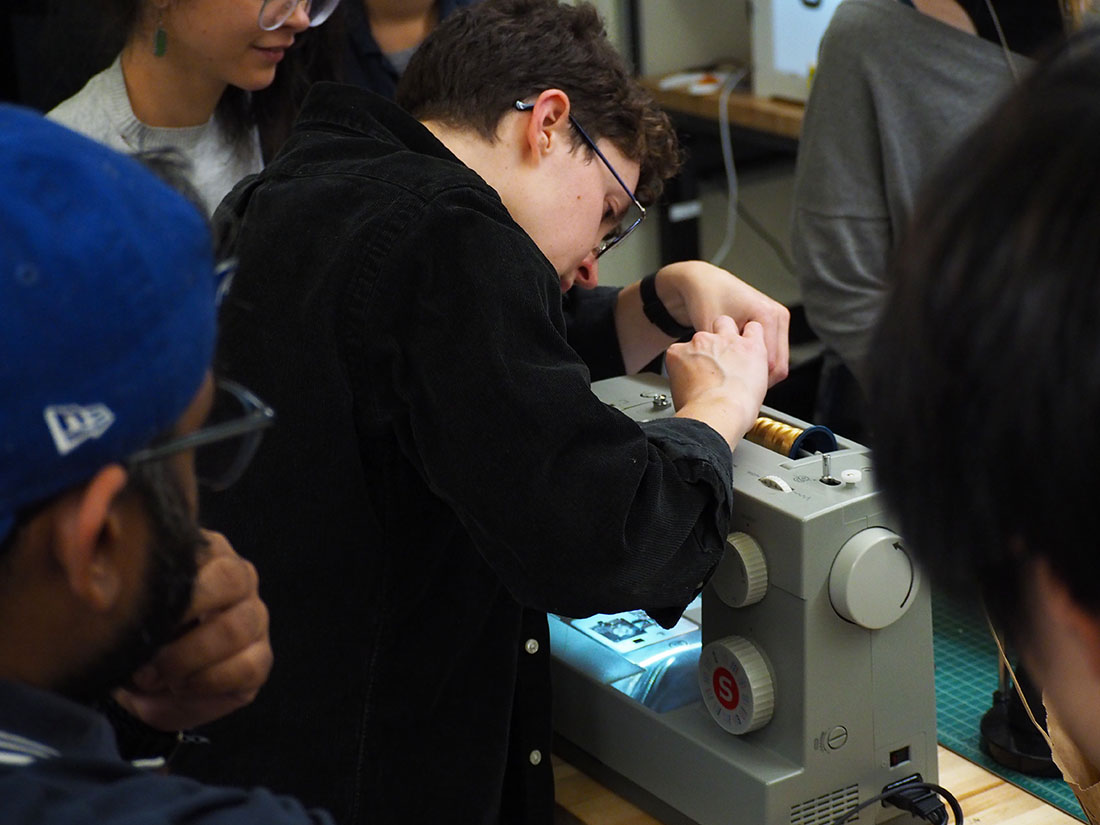
 Foley Scholar finalist Allie Riggs (PhD DM) demonstrates the use of an industrial sewing machine.

Foley Scholar finalist Allie Riggs (PhD DM) demonstrates the use of an industrial sewing machine.

 
News Contact

Zeagler Selected for Emerging Leaders Program

Clint Zeagler

Clint Zeagler

Clint Zeagler, principal research scientist in the Institute for People and Technology (IPaT), was selected to join Georgia Tech’s Emerging Leaders Program for 2023-2024. Zeagler is also serving as the interim co-director of strategic partnerships for IPaT.

The Emerging Leaders Program is a collaboration between the Office of the Provost, the Office of the Executive Vice President for Research, the Institute for Leadership and Social Impact, and the Office of the Vice Provost for Faculty. Over the course of six months, participants take part in several activities—workshops, small-group work, and coaching—to contribute to leadership development. Zeagler is joining the eighth cohort of Georgia Tech’s Emerging Leaders Program. This is the first year the program has been open to senior and principal non-tenure track faculty and research faculty.

Zeagler’s research background encompasses industrial design, fashion design, and human centered computing. During his time at Georgia Tech, he has taught and created new and interdisciplinary coursework for the College of Computing, Ivan Allen College of Liberal Arts, and the College of Design. Zeagler became part of the IPaT team in 2013 helping create the Wearable Computing Center and acted as its program manager. As IPaT’s co-director of strategic partnerships for IPaT, he is engaging with both external and internal partners to develop rewarding research and scholarly endeavors.

His interest in fashion (Master of Arts in fashion, Domus Academy, Milan), industrial design, textiles (Bachelor of Science, industrial design, Georgia Tech, minor in textile manufacturing) and computing (Ph.D. in human centered computing, Georgia Tech) drives his research on electronic textiles and on-body interfaces at the Georgia Institute of Technology. He is a member of the NASA Wearable Technology Cluster and interacts with the NASA Georgia Space Grant Consortium

Georgia Tech’s eighth cohort of faculty members selected for the Emerging Leaders Program can be found here.

 
News Contact

Investigating Transdisciplinary Approaches for Community-engagement

This talk is part of the GVU Brown Bag Seminar Series brought to you by the Institute for People and Technology at Georgia Tech.
 

Foad Hamidi

Assistant Professor
Information Systems Department

Algorithmic Scenario Generation As Quality Diversity Optimization

This talk is part of the GVU Brown Bag Seminar Series brought to you by the Institute for People and Technology at Georgia Tech.

Speaker: Stefanos Nikolaidis, Ph.D., Assistant Professor of Computer Science at the University of Southern California

Date: 2023-11-09 12:30 pm

Location: 
Technology Square Research Building (TSRB, 1st Floor Ballroom)
85 Fifth Street NW
Atlanta, GA 30308