
Chatbots Are Poor Multilingual Healthcare Consultants, Study Finds
May 15, 2024 — Atlanta
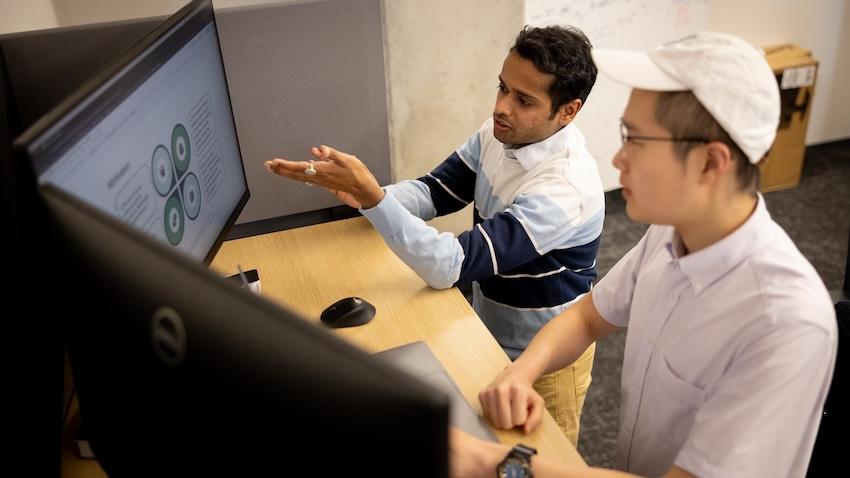
Georgia Tech researchers say non-English speakers shouldn’t rely on chatbots like ChatGPT to provide valuable healthcare advice.
A team of researchers from the College of Computing at Georgia Tech has developed a framework for assessing the capabilities of large language models (LLMs).
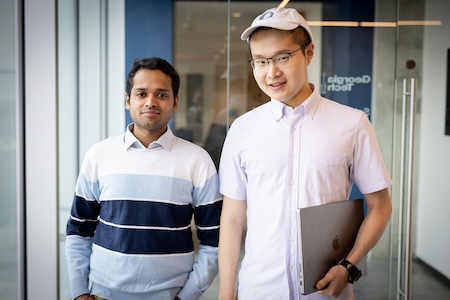
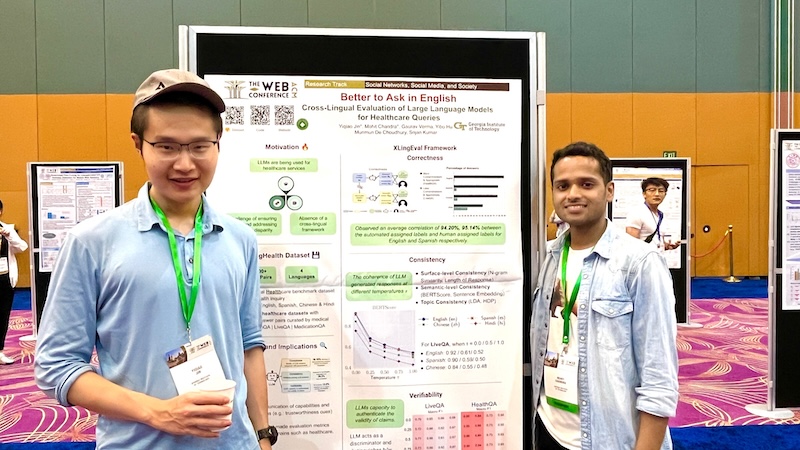
Ph.D. students Mohit Chandra and Yiqiao (Ahren) Jin are the co-lead authors of the paper Better to Ask in English: Cross-Lingual Evaluation of Large Language Models for Healthcare Queries.
Their paper’s findings reveal a gap between LLMs and their ability to answer health-related questions. Chandra and Jin point out the limitations of LLMs for users and developers but also highlight their potential.
Their XLingEval framework cautions non-English speakers from using chatbots as alternatives to doctors for advice. However, models can improve by deepening the data pool with multilingual source material such as their proposed XLingHealth benchmark.
“For users, our research supports what ChatGPT’s website already states: chatbots make a lot of mistakes, so we should not rely on them for critical decision-making or for information that requires high accuracy,” Jin said.
“Since we observed this language disparity in their performance, LLM developers should focus on improving accuracy, correctness, consistency, and reliability in other languages,” Jin said.
Using XLingEval, the researchers found chatbots are less accurate in Spanish, Chinese, and Hindi compared to English. By focusing on correctness, consistency, and verifiability, they discovered:
- Correctness decreased by 18% when the same questions were asked in Spanish, Chinese, and Hindi.
- Answers in non-English were 29% less consistent than their English counterparts.
- Non-English responses were 13% overall less verifiable.
XLingHealth contains question-answer pairs that chatbots can reference, which the group hopes will spark improvement within LLMs.
The HealthQA dataset uses specialized healthcare articles from the popular healthcare website Patient. It includes 1,134 health-related question-answer pairs as excerpts from original articles.
LiveQA is a second dataset containing 246 question-answer pairs constructed from frequently asked questions (FAQs) platforms associated with the U.S. National Institutes of Health (NIH).
For drug-related questions, the group built a MedicationQA component. This dataset contains 690 questions extracted from anonymous consumer queries submitted to MedlinePlus. The answers are sourced from medical references, such as MedlinePlus and DailyMed.
In their tests, the researchers asked over 2,000 medical-related questions to ChatGPT-3.5 and MedAlpaca. MedAlpaca is a healthcare question-answer chatbot trained in medical literature. Yet, more than 67% of its responses to non-English questions were irrelevant or contradictory.
“We see far worse performance in the case of MedAlpaca than ChatGPT,” Chandra said.
“The majority of the data for MedAlpaca is in English, so it struggled to answer queries in non-English languages. GPT also struggled, but it performed much better than MedAlpaca because it had some sort of training data in other languages.”
Ph.D. student Gaurav Verma and postdoctoral researcher Yibo Hu co-authored the paper.
Jin and Verma study under Srijan Kumar, an assistant professor in the School of Computational Science and Engineering, and Hu is a postdoc in Kumar’s lab. Chandra is advised by Munmun De Choudhury, an associate professor in the School of Interactive Computing.
The team will present their paper at The Web Conference, occurring May 13-17 in Singapore. The annual conference focuses on the future direction of the internet. The group’s presentation is a complimentary match, considering the conference's location.
English and Chinese are the most common languages in Singapore. The group tested Spanish, Chinese, and Hindi because they are the world’s most spoken languages after English. Personal curiosity and background played a part in inspiring the study.
“ChatGPT was very popular when it launched in 2022, especially for us computer science students who are always exploring new technology,” said Jin. “Non-native English speakers, like Mohit and I, noticed early on that chatbots underperformed in our native languages.”
School of Interactive Computing communications officer Nathan Deen and School of Computational Science and Engineering communications officer Bryant Wine contributed to this report.
Bryant Wine, Communications Officer
bryant.wine@cc.gatech.edu
Nathan Deen, Communications Officer
ndeen6@cc.gatech.edu
Teaching AI to Collaborate, not Merely Create, Through Dance
Jun 10, 2024 — Atlanta

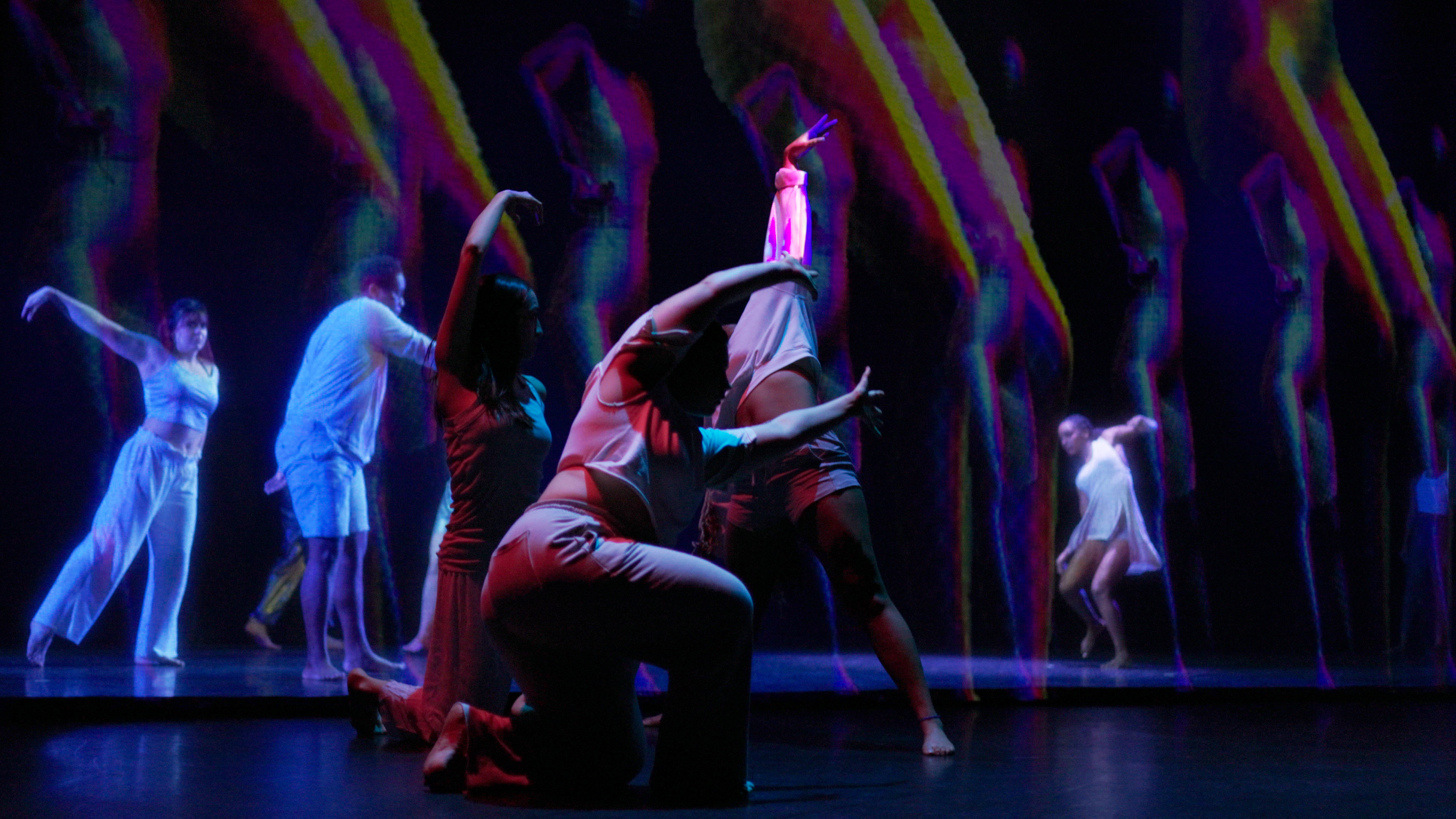
A Kennesaw State University dance student and the LuminAI-powered avatar dance together.
Two children are playing with a set of toys, each playing alone. That kind of play involves a somewhat limited set of interactions between the child and the toy. But what happens when the two children play together using the same toys?
“The actions are similar, but the choices and outcomes are very different because of the dynamic changes they’re making with the other person,” says Brian Magerko, Regents’ Professor in Georgia Tech’s School of Literature, Media, and Communication. “It’s a thing that humans do all the time, and computers don’t do with us at all.”
Welcome to the next frontier of artificial intelligence (AI) — not just generating but collaborating in real-time.
Magerko and his colleagues, Georgia Tech research scientist Milka Trajkova and Kennesaw State University Associate Professor of Dance Andrea Knowlton, are putting a collaborative AI system they’ve developed to the ultimate test: the world’s first collaborative AI dance performance.
Dance Partner
LuminAI is an interactive system that allows participants to engage in collaborative movement improvisation with an AI virtual dance partner projected on a nearby screen or wall. LuminAI analyzes participant movements and improvises responses informed by memories of past interactions with people. In other words, LuminAI learns how to dance by dancing with us.
The National Science Foundation-supported project began about 12 years ago in a lab and became an art installation and public demo. LuminAI has since moved into a different phase as a creative collaborator and education tool in a dance studio.
“We’re looking at the role LuminAI can play in dance education. As far as we’re aware, this is the first implemented version of an AI dancer in a dance studio,” says Trajkova, who was a professional ballet dancer before becoming a research scientist on the project.
To prepare LuminAI to collaborate with dancers, the research team started by studying pairs of improvisational dancers.

“We’re trying to understand how non-verbal, collaborative creativity occurs,” Knowlton says. “We start by trying to understand influencing factors that are perceived as contributing to improvisational success between two artists. Through that understanding, we applied those criteria to an AI system so it can have a similar experience with co-creative success.”
“We’re working on a creative arc,” adds Trajkova. “So instead of the AI agent just generating movements in response to the last thing that happened, we’re working to track and understand the dynamics of creative ideas across time as a continuous flow, rather than isolated instances of reaction.”
Students from Knowlton’s improvisational dance class at Kennesaw State spent two months of their spring semester working routinely with the LuminAI dancer and recording their impressions and experiences. One of the purposes the team discovered is that LuminAI serves as a third view for dancers and allows them to try ideas out with the system before trying it out with a partner.
The classroom experiment will culminate in a public performance on May 3 at Kennesaw State’s Marietta Dance Theater featuring the students performing with the LuminAI dancer. As far as the research team is aware the event is the world’s first collaborative AI dance performance.
While not all the dancers embraced having an AI collaborator, some of those who were skeptical at first left the experience more open to the possibility of collaborating with AI, Knowlton says. Regardless of their feelings toward working with AI, Knowlton says she believes the dancers gained valuable skills in working with specialized technology, especially as dance performances evolve to include more interactive media.
Refined Movement
So, what’s next for LuminAI? The project represents at least two possible paths for its learnings. The first includes continued exploration about how AI systems can be taught to cooperate and collaborate more like humans.
“With the advent of generative AI these past few years, it’s been really clear how great a need there is for this sort of social cognition,” says Magerko. “One of the things we’re going to be getting off the ground is sense-making with large language models. How do you collaborate with an AI system – rather than just making text or images, they’ll be able to make with us.”
The second involves the body movements LuminAI has been cataloging and analyzing over the years. Dance exemplifies highly refined motor skills, often exhibiting a level of detail surpassing that found in various athletic disciplines or physical therapy. While the tools designed to capture these intricate movements—through cameras and AI—are still nascent, the potential for harnessing this granular data is significant, Trajkova says.
That exploration begins on May 30 with a two-day summit being held at Georgia Tech to discuss its application for transforming performance athletics, with interdisciplinary participants in dance, computer vision, biomechanics, psychology, and human-computer interaction from Georgia Tech, Emory, KSU, Harvard, Royal Ballet in London, and Australian Ballet.
“It’s about understanding AI's role in augmenting training, promoting wellness as well as diving deep in decoding the artistry of human movements. How can we extract insights about the quality of athlete’s movements so we can help develop and enhance their own unique nuances?” Trajkova says.
Megan McRainey
megan.mcrainey@gatech.edu
Technology Licensing Lunch and Learn-Intellectual Property Litigation
Intellectual Property Litigation
Join Technology Licensing for a Lunch and Learn Presentation:
Tuesday, May 21, 2024
11am - 1pm
Location-GTAPS Classroom
Presentation given by Puja Lea, Partner, Troutman Pepper. Puja is a seasoned patent litigator and GT grad!
IPaT Hosts High School Computer Science Teachers
Mar 29, 2024 —
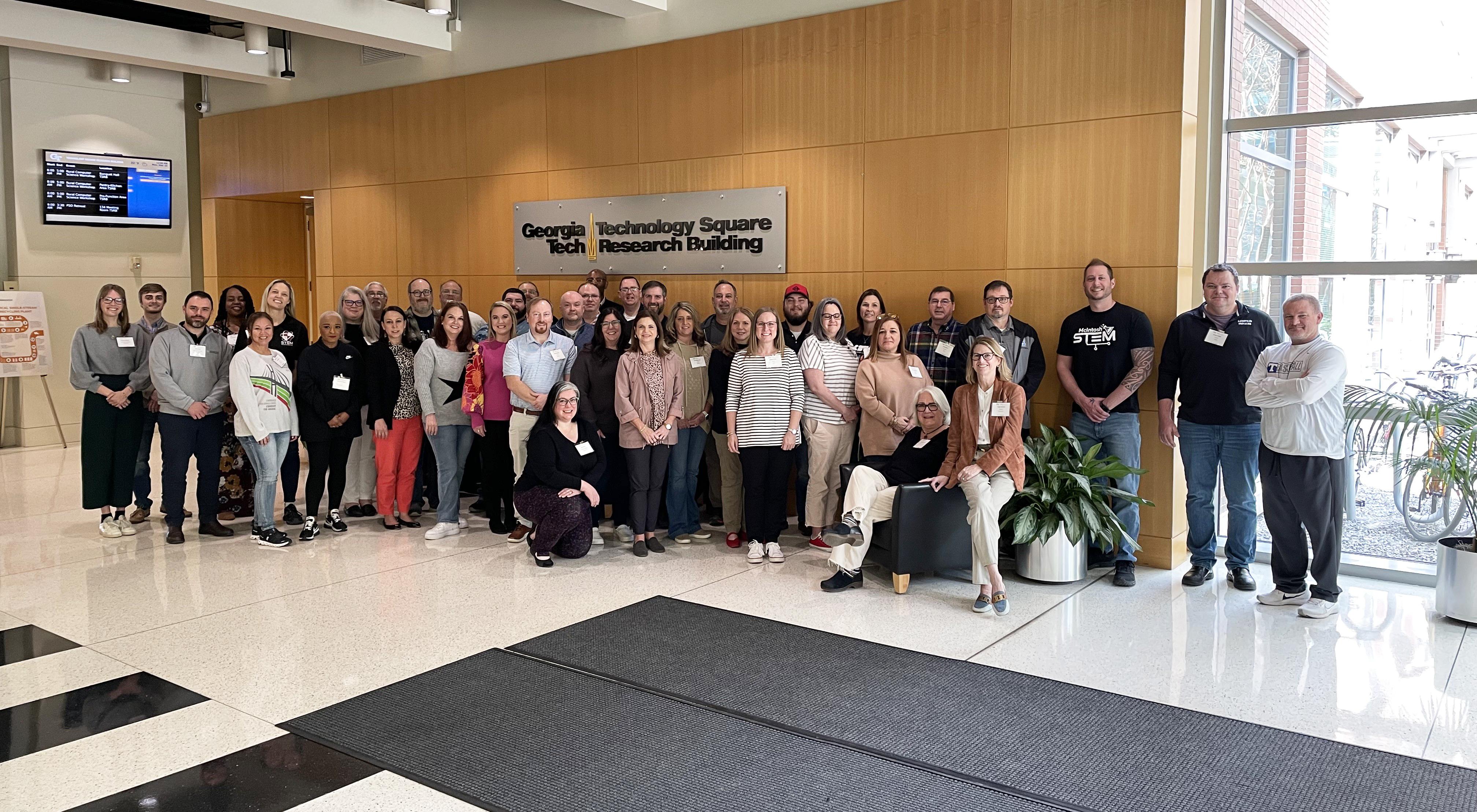
Georgia high school computer science teachers participating in the Georgia Tech Rural Computer Science Initiative
On March 25-26, the Institute for People and Technology (IPaT) hosted the spring gathering of rural Georgia high school computer science teachers participating in a state funded program to help high schoolers learn computer programming.
The Georgia Tech Rural Computer Science Initiative offers co-teaching lessons prepared by Georgia Tech professors. The program offers virtual classes in computer science to help develop career pathways by exposing high school students to critical areas such as coding, cybersecurity, artificial intelligence, sensors, and data visualization. The program is funded by the Georgia General Assembly.
The initiative, launched in 2022, includes 16 school districts, 19 high schools, and has taught 1,329 students. Continued growth of the program is expected in 2024 as the number of districts participating will grow to 24 school districts.
The program is run by Lizanne DeStefano, director of Georgia Tech’s Center for Education Integrating Science, Mathematics and Computing (CEISMC), and Leigh McCook, director with the Georgia Tech Research Institute (GTRI). There are now thirteen Georgia Tech employees supporting the program across CEISMC, GTRI, and IPaT.
The meeting was designed to gather feedback and envision future directions to make the program even more successful.
2024 BioE Day
Presentations from the 2023 BioE Award Winners, featured BioE Alum Seminars, and a Rapid Fire Thesis Competition. Lunch served (while supplies last!).
L[ux] Lab Hosts Medical Device Usability Study
Apr 18, 2024 —
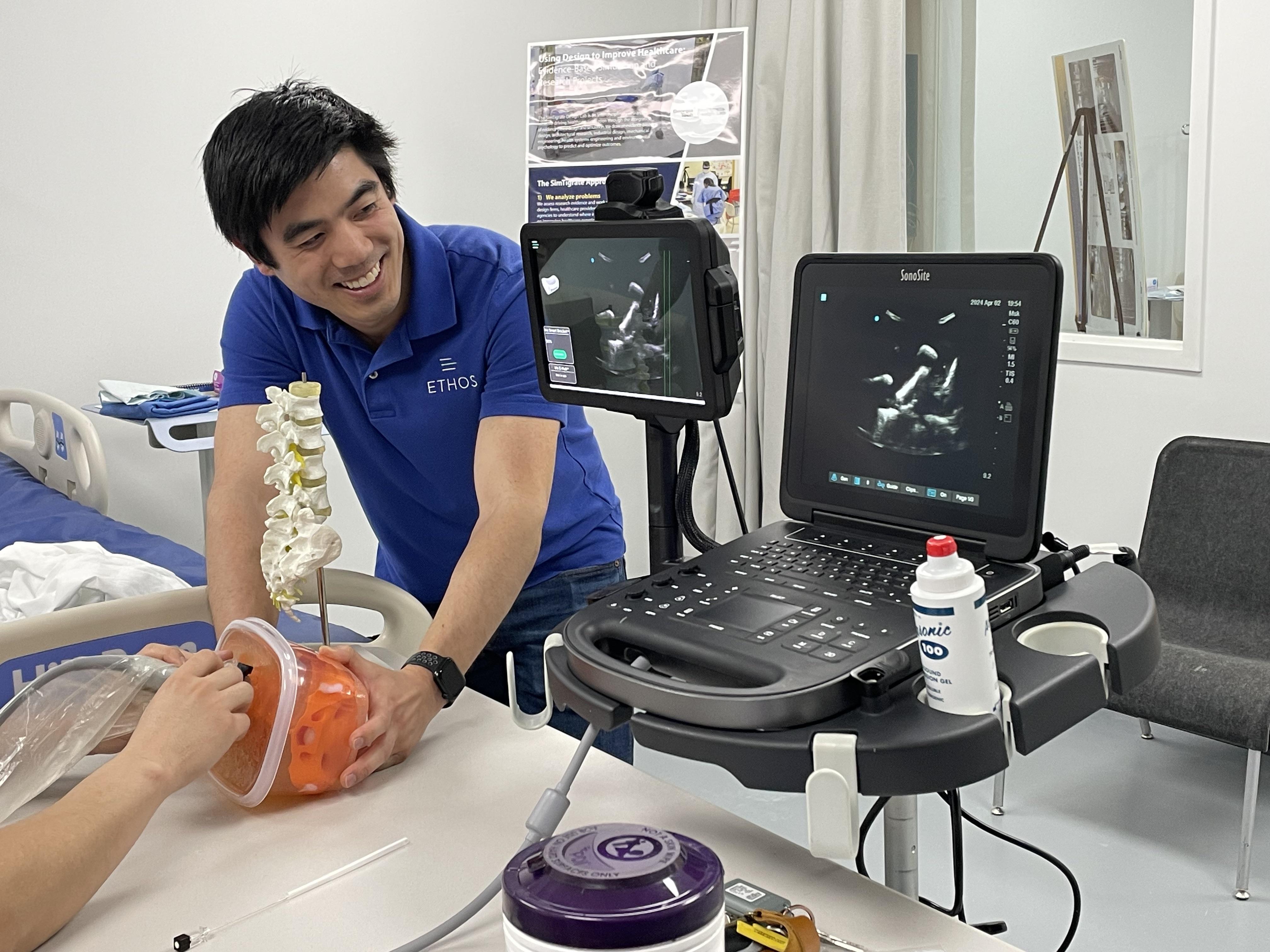
Cassidy Wang interacting with a physician who is testing Ethos' needle guidance system.
Ethos Medical recently made use of the College of Design’s L[ux] Lab to conduct a usability study of its needle guidance system prototype. Founded by Georgia Tech students (now alumni), Ethos Medical won the 2019 Georgia Tech InVenture Prize for their first-of-its-kind medical device.
Using ultrasound imaging technology coupled with a custom-built guidance tool, they invented a guidance system to help physicians navigate needles into the spine accurately and safely. In 2020, they were awarded a Phase I grant from the National Science Foundation’s Small Business Innovation Research program, followed by a Phase II grant in 2021.
Ethos Medical’s co-founders Cassidy Wang, CEO, and Lucas Muller, CTO, personally oversaw the study held in the Technology Square Research Building lab space, working with physicians from local hospitals to better understand the human factors of their novel device.
The study was designed and moderated by Maureen Carroll and Stephen Jones of Creature, an award-winning industrial design firm based in Atlanta.
“Creature and our engineering partner, Enginuity Works, are working to improve the design, human factors, and usability of the system. By using the L[ux] Lab and bringing in emergency room doctors, we can observe physicians using the system and evaluate how well our system integrates with their work process,” said Carroll, founder of Creature.
Several Georgia Tech students from the SimTigrate Design Lab were also present, gaining hands-on experience with the planning and execution of such a study.
Part of the study’s goals are to assess how emergency room clinicians may adapt their existing workflow for performing lumbar punctures to one that incorporates this new needle guidance system while considering realistic procedural and safety constraints. A second goal is to evaluate the ability of clinicians to accomplish specific tasks that require interaction with the user interfaces of the system and identify interfaces and interactions that they perceive to be unintuitive or difficult to perform.
The L[ux] Lab, part of the SimTigrate Design Lab space, is an interdisciplinary research lab using evidence-based design to improve the medical experience for patients and providers. SimTigrate – combining concepts of simulation and integration – grew out of the Healthy Environments Research Group which involved Georgia Tech and Emory University with the goal of improving healthcare outcomes. The lab is affiliated with the Georgia Tech College of Design and is led by Jennifer DuBose, executive director of the SimTigrate Design Lab and principal research associate in the College of Design.
“We’re fortunate that the L[ux] Lab’s simulated clinical environment is so conducive to medical device usability testing, and we’re grateful for all the support shown by Jennifer and the rest of the folks at SimTigrate,” said Wang, CEO of Ethos Medical. “We’ve already begun making improvements to address the friction points discovered during the clinicians’ hands-on interactions. We’re also seeing that many of these practitioners are excited about the capabilities our device brings to the point of care, both for lumbar punctures and beyond!”
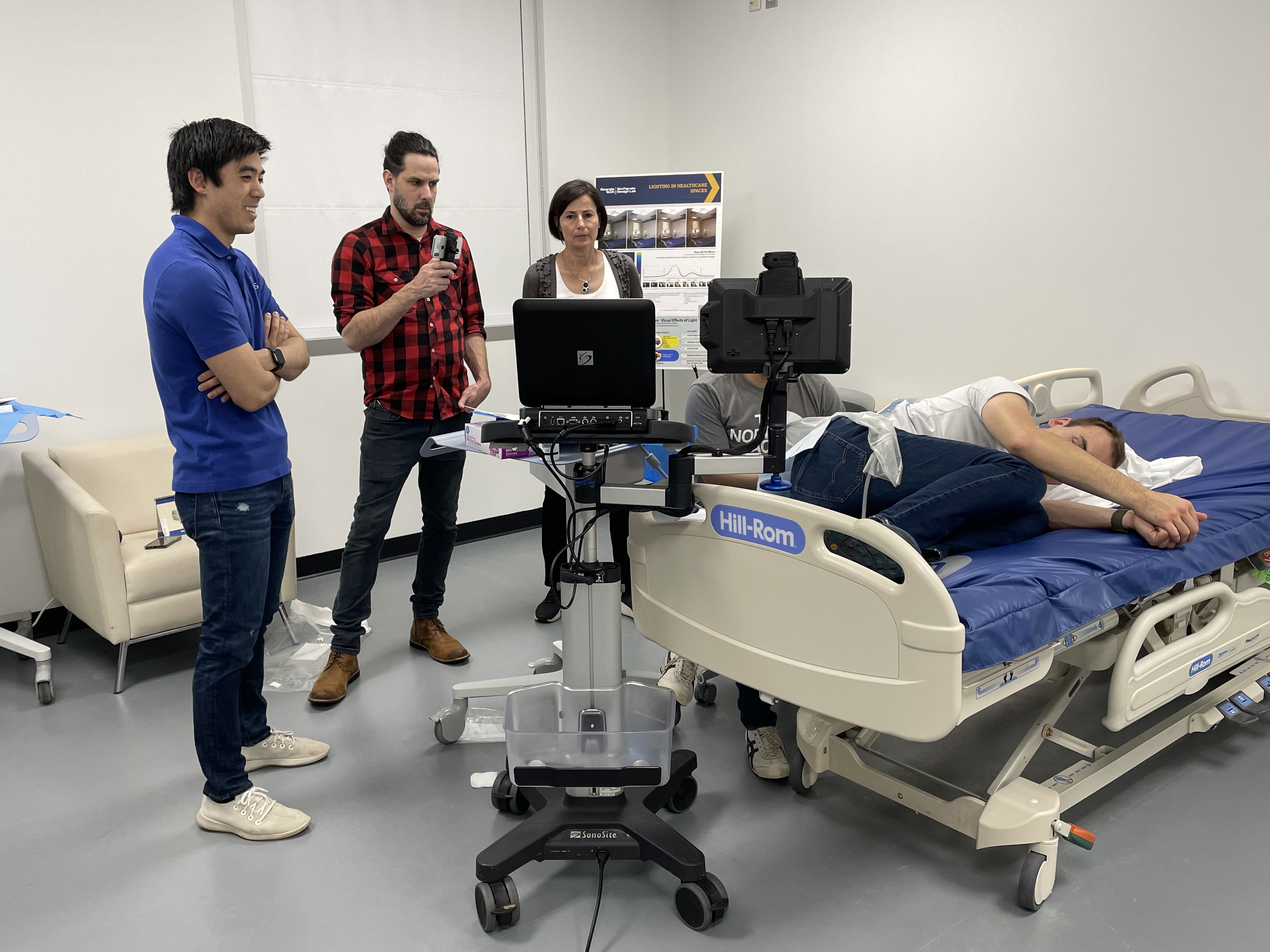
Lucas Muller plays the role of patient as a clinician tests the needle testing system as others observe.
NSF Award to Launch Study of How Older Adults Interact With Robots
Mar 01, 2024 —
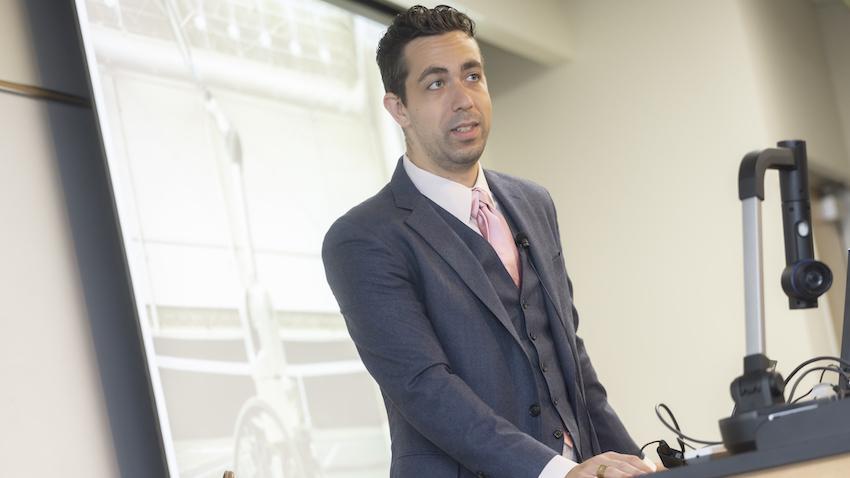
Matthew Gombolay
With the number of older adults in the U.S. population rising and straining the systems in place to take care of them, Matthew Gombolay sees a solution — robots.
Gombolay received a National Science Foundation (NSF) CAREER Award for research that could make assistive robots the standard of care for older adults. The award is the most prestigious the NSF offers to early-career faculty.
“When people age, they deserve to age with dignity and not just be locked away,” said Gombolay, an assistant professor in Georgia Tech’s School of Interactive Computing. “If you don’t have enough resources or access to home nurses or adult children who have extra time to take care of you, what’s going to happen?”
Gombolay will receive nearly $600,000 to collect the largest data set of its kind on how older adults interact and communicate with assistive robots. Gombolay will then use that data to create algorithms that can be deployed in assistive robots and understand the needs of older adults.
Bench2Market Talks
REGISTER HERE
Securing funding for your early-stage startup can be one of the most challenging aspects of entrepreneurship. In addition to providing funds for your startup to develop and grow, investors often play a key role in company management and strategy. View this interactive panel discussion with investors from various firms to learn what they look for in a startup company and how to position yourself for fundraising success.
Safe and Secure Elections Require Interdisciplinary Collaboration
Apr 15, 2024 —
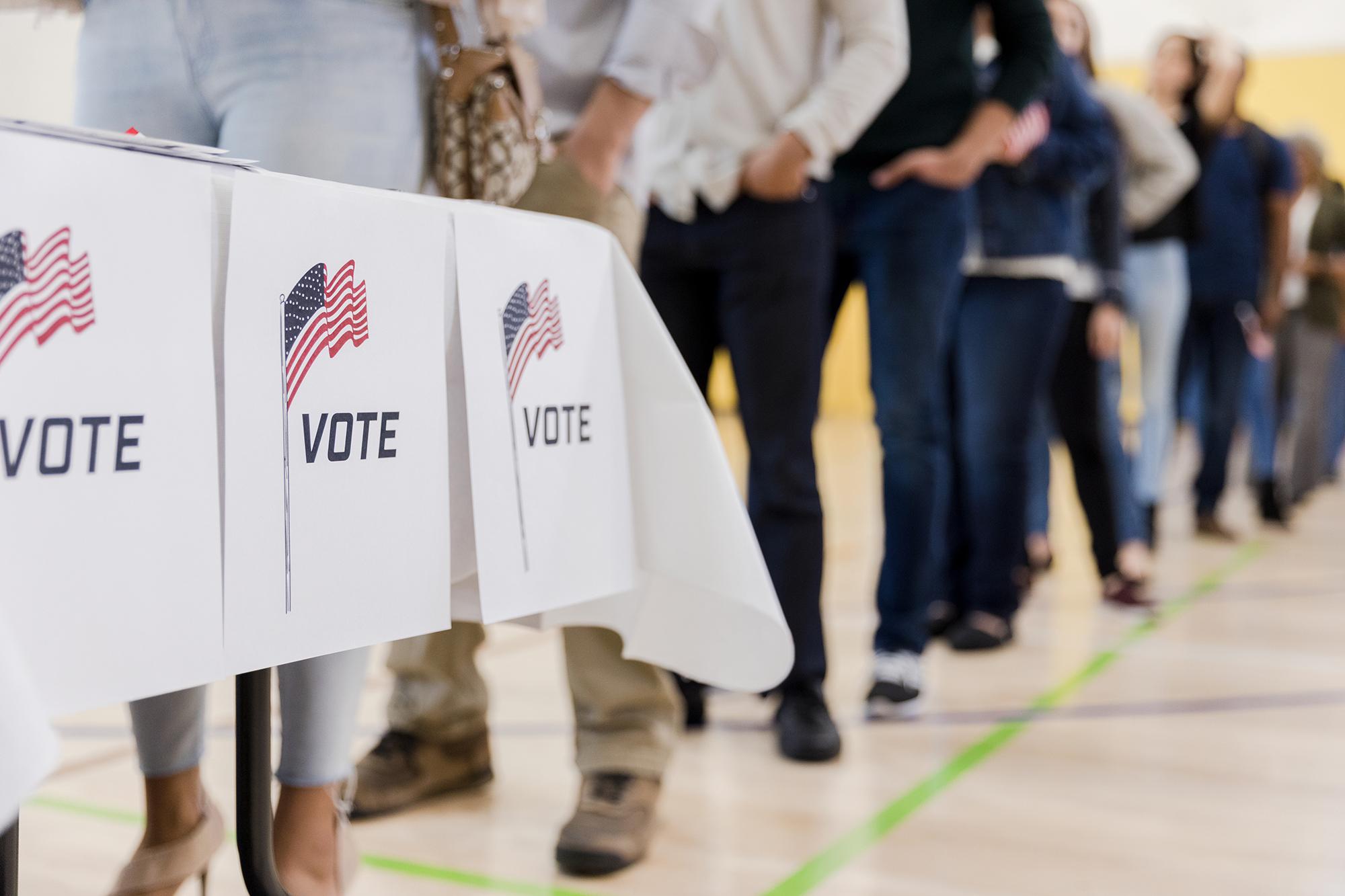
As nearly half of the world’s voting population heads to the polls this year, technology’s impact on elections will be front and center.
It’s a complex issue that is, unfortunately, awash in misunderstanding and misinformation. What’s more, according to Richard DeMillo, professor and founder of the School of Cybersecurity and Privacy (SCP) at Georgia Tech, there is a tendency in technology fields to hyperfocus on technical problems at the expense of complex social realities. “There are famous mathematicians who trained their students to not worry about the real world,” DeMillo says. “But the real world has a way of intruding.”
As a new dean at Georgia Tech in the early 2000s, DeMillo saw voting technology burst into national headlines after the highly contested presidential election between George W. Bush and Al Gore. Congress authorized billions of dollars for states to purchase voting machines, with little to no oversight, and Georgia’s secretary of state was one of the biggest spenders of these federal funds in an attempt to create what DeMillo remembers as “an unambiguously unbiased way of voting.” DeMillo and his cybersecurity colleagues at Georgia Tech put this idea to the test. “It didn’t take much to hack a voting machine in 2002,” he says.
DeMillo has since developed the Safe and Secure Elections research group, an interdisciplinary team from computer science, systems engineering, cognitive science, and international affairs that works on election security in the U.S. and abroad.
Read more about Georgia Tech's support of this public interest technology (PIT) >>
Researcher to Advise WHO on Addressing Loneliness and Social Isolation
Apr 12, 2024 —
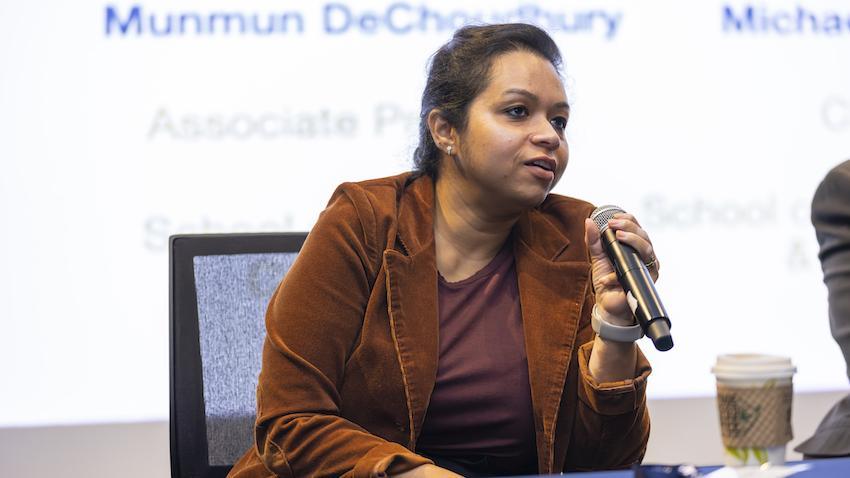
Munmun De Choudhury, an associate professor in the School of Interactive Computing, is one of three U.S. experts on the internationally diverse committee.
The World Health Organization (WHO) has launched a new initiative to raise global awareness of loneliness and social isolation and to reduce their impact.
To stay informed by global experts as it plans potential policies on the subject, the WHO has created the Technical Advisory Group on Social Connection (TAG-SC). The 20-member committee will serve as an advisory body to guide the WHO on how it can increase political visibility, measure the extent of the problem, and identify effective interventions.
Munmun De Choudhury, an associate professor in the School of Interactive Computing, is one of three U.S. experts on the internationally diverse committee.
De Choudhury is renowned for her research on the role of social media and how it shapes and influences mental health. She will serve a two-year term on the advisory group, providing insight to the TAG-SC on how social media and other technologies can affect loneliness and social connection.
“TAGs are the highest level of technical advisors at WHO and are noted to wield significant power as an independent body in shaping evidence-based policies and reforms on issues threatening global health,” De Choudhury said.
“My involvement will center around how social media use relates to mental health and well-being outcomes, spanning varied populations, platforms, and cultural contexts, including the Global North and the Global South.”
The advisory group’s findings will be part of a report that the WHO shares with its member states and partners. The report could guide relevant discussions within the United Nations General Assembly.
“We’re thinking about this question on a global stage, and an organization like WHO can help make this a global focus,” she said. “It’s an issue that is of significance everywhere in the world.”
The WHO estimates that loneliness and social isolation can increase the risk of mortality by 14-32%, which is on par with other well-known risk factors such as smoking and excessive drinking. The Covid-19 pandemic has exacerbated the problem.
“The harmful effects of loneliness are not just harmful mentally, but there are physical health aspects,” De Choudhury said. “Studies have shown that people who felt lonely have shorter life spans than those who felt supported.
“There is an increased risk of things like cardiovascular disease or stroke, and suicide rates are also higher. To ensure our society wants to feel good and healthy, we must tackle this as a problem.”
The TAG-SC will advise the Secretariat of the WHO Commission on Social Connection, which comprises two co-chairs and nine commissioners tasked with making the harms of social isolation and loneliness a global health priority.
De Choudhury said the first step for TAG-SC is to measure the global impact of loneliness. They will do this by developing culturally aware measurement tools to assess the problem in different parts of the world. The process will inform any research, data collection initiatives, or interventions WHO may recommend.
“To take on this challenge, we must figure out the extent of the problem,” she said. “Before we can collect any data or identify potential mitigation strategies, we need to know what we should be measuring, and that’s where this committee plays a role.”
This recognition is the second major committee appointment De Choudhury has received in the last two years. She recently advised the National Academies of Sciences, Engineering, and Medicine (NASEM) on a 250-page report in December detailing social media’s impact on the health of adolescents and children.
Photo by Terence Rushin/College of Computing.
Nathan Deen